Square Foot Gardening
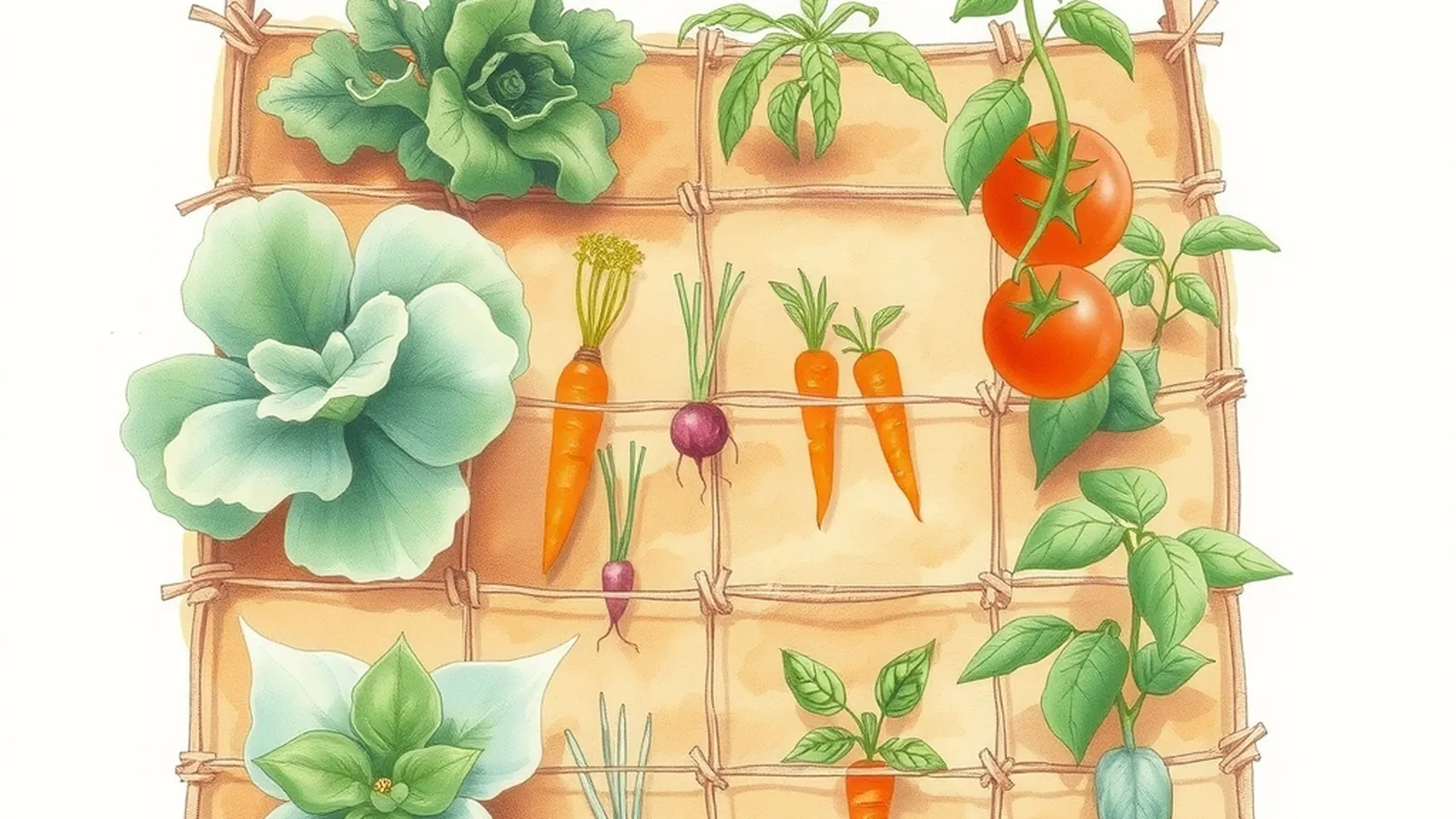
Square foot gardening is a way of planting a small raised bed in a grid of 1-foot squares, with a set number of plants in each square based on how big they grow. Large plants get a square to themselves, medium plants go four to a square, small ones nine, and tiny ones sixteen. The grid makes planning simple and helps you fit a lot of variety into a small space.
It's one of the most beginner-friendly planting methods in our Small Spaces section, especially if a long row garden feels like too much. Here's how it works and whether it suits you.
How the grid works
Picture a 4-by-4-foot bed. Divide it into 16 squares with string, thin wood strips or just lines drawn in the soil. Each square holds one type of plant. Because each square is planted on its own, you can grow 16 different crops in one small bed, or repeat your favorites.
A bed 4 feet wide is common because you can reach the middle from either side without stepping on the soil. If the bed is against a wall, make it 2 feet wide.
Spacing per square
Here's the usual starting chart. These numbers are guidelines, so check the mature size of your variety and adjust.
| Plants per square | Typical crops |
|---|---|
| 1 | Tomato (staked or caged), pepper, broccoli, cabbage, eggplant |
| 2 | Cucumber (on a trellis), some compact squash on a trellis |
| 4 | Lettuce (heads), Swiss chard, parsley, basil, marigolds |
| 9 | Bush beans, spinach, beets, peas (on a trellis) |
| 16 | Radishes, carrots, green onions, small turnips |
Sprawling crops like full-size winter squash and many melons usually need more than one square unless you train them up a trellis.
To space plants inside a square, divide it evenly. For four, make a small plus sign and plant one in each quarter. For nine, picture a tic-tac-toe board. For sixteen, make a four-by-four grid with your fingers.
Setting up a square foot bed
- Build or buy a bed. A simple frame about 4 by 4 feet and at least 6 inches deep is a typical start. Our guide on how to build a raised garden bed covers materials and filling.
- Fill with a light, rich mix. Blend topsoil or a raised bed mix with plenty of compost so it holds moisture but drains.
- Mark the grid. Use twine and small nails, thin wood strips or a lightweight lattice.
- Put tall crops on the north side. In the Northern Hemisphere, this keeps tomatoes and trellised crops from shading shorter plants.
- Plan each square. Sketch the grid on paper first and write a crop in each box.
A sample 4-by-4 plan
Example (fictional): Riley's first bed in early summer might look like this, north row on top.
| Tomato | Tomato | Cucumber (trellis) | Cucumber (trellis) |
| Pepper | Basil (4) | Basil (4) | Marigolds (4) |
| Bush beans (9) | Bush beans (9) | Swiss chard (4) | Parsley (4) |
| Lettuce (4) | Radishes (16) | Carrots (16) | Green onions (16) |
When the radishes are pulled, Riley replants that square with more lettuce or another round of radishes. That's the method's biggest strength: one square at a time can be harvested and resown.
If you're unsure which crops to try, our list of the easiest vegetables to grow shows season and space needs for common beginner picks.
Pros
- Simple planning. A grid is easier to picture than rows and spacing charts.
- Less weeding. Close spacing shades the soil, which can make it harder for weeds to sprout.
- Easy succession. Replant one square at a time as crops finish.
- Variety in a small space. Great for trying many crops at once.
- Less wasted seed. You sow only what fits each square.
Cons
- Crowding risk. Some varieties grow bigger than the chart assumes. Crowded plants compete for light and water and can be more prone to disease.
- Watering needs. A shallow, densely planted bed can dry out quickly in heat.
- Soil cost and effort. Filling a bed with good mix takes work up front.
- Not ideal for sprawling crops unless you add trellises.
Watering and care
Water at the base of plants, not over the leaves, ideally in the morning. A watering can, a hose with a gentle nozzle or a short soaker hose laid between squares works well. Add a thin layer of mulch around larger plants. Refresh the soil with compost each time you replant a square.
Planting times depend on your zone and frost dates. Your local Cooperative Extension office can tell you when cool-season and warm-season crops go in where you live.
Planning a season of squares
One reason people like this method is how easy it is to keep squares busy. A rough pattern for many US gardens, adjusted to your frost dates:
- Early spring: sow cool-season crops like lettuce, spinach, radishes and peas.
- Late spring: plant warm-season crops like tomatoes, peppers and basil once frost danger has passed.
- Midsummer: as spring greens finish, replant those squares with bush beans or more basil.
- Late summer to fall: sow another round of lettuce, spinach and radishes as the weather cools.
Keep a copy of your grid each season and write what grew well in each square. Rotating crop families among squares from year to year can help reduce some soil-borne problems.
Where to go next
- No ground for a bed? Try the same planning on a patio with fruit in containers, where one strawberry or blueberry pot takes the place of a square.
- A square foot bed is a natural centerpiece for small yard design, which shows how to fit edibles alongside seating and privacy.
- Leave a square or two for herbs, and keep extras going inside with indoor herbs on a bright windowsill.
Something to do this weekend
Draw a 4-by-4 grid on paper. Fill in each square with a crop you'd actually eat, using the spacing chart above, and put any tall plants in the top row. Keep the sketch; it's your planting plan and a record for next year.
Want a step-by-step plan or guide?
Some people like the structure of a paid guide or set of plans. This button opens a third-party program from one of our advertising partners. Its claims are its own, not ours, so weigh them against our checklist for judging paid plans.
See the partner program →We may be paid when you click. The program shown can change. Read its terms before you buy anything. How this works
Frequently asked questions
How many plants go in one square foot?
It depends on the plant's mature size. A common rule is 1 plant per square for large crops like tomatoes, 4 for medium ones like lettuce, 9 for smaller ones like bush beans and 16 for tiny ones like radishes and carrots. Treat these as starting points and adjust for your varieties.
Does square foot gardening work in containers?
The idea works in any shallow, wide container, like a large planter box. Divide the surface into squares and use the same spacing logic. Very small pots don't benefit much because there's only room for one or two plants anyway.
How deep does a square foot garden bed need to be?
Many people use beds about 6 inches deep or more. Deeper soil holds more water and gives root crops and tomatoes more room, so a bed of 8 to 12 inches is easier to manage in hot climates.