The Easiest Vegetables to Grow
The easiest vegetables to grow are the ones that sprout fast, tolerate a few mistakes and don't need much fuss: bush beans, radishes, leaf lettuce, zucchini, cherry tomatoes, peas, kale and herbs like basil and chives. Pick three to five of them, match each one to its season and the sun you have, and you'll have a garden that's easy to keep up with.
"Easy" doesn't mean nothing can go wrong. Weather, soil and pests vary a lot across the US. But these crops give you the best odds of learning the basics while still getting something to eat. Once you have a few wins, the rest of our Vegetables & Herbs section walks you through each crop in more depth.
What makes a vegetable "easy"
Before the table, here's what we looked for. A beginner-friendly crop usually:
- Grows well from seed sown directly in the garden, or from an inexpensive nursery transplant
- Comes up and grows quickly, so you see progress and can try again if something fails
- Doesn't need pruning, hand pollination or complicated support
- Tolerates a range of soils as long as drainage is decent
- Gives you something to pick over several weeks, not just one day
The beginner crop table
Use this table to narrow your list. "Cool season" crops prefer spring and fall, and many handle light frost. "Warm season" crops need warm soil and nights and die at the first frost.
| Crop | Season | Space needed | Sun | Start from |
|---|---|---|---|---|
| Radishes | Cool | Very small, fits between other crops | Full sun to part shade | Seed in the ground |
| Leaf lettuce | Cool | Small, great in pots | Part shade is fine | Seed or transplant |
| Peas | Cool | Small footprint, grows up a trellis | Full sun | Seed in the ground |
| Kale | Cool | Medium | Full sun to part shade | Seed or transplant |
| Bush beans | Warm | Small to medium | Full sun | Seed in the ground |
| Zucchini | Warm | Large, one plant spreads wide | Full sun | Seed or transplant |
| Cherry tomatoes | Warm | Medium, needs a cage or stake | Full sun | Transplant |
| Peppers | Warm | Small to medium | Full sun | Transplant |
| Basil | Warm | Small, great in pots | Full sun | Seed or transplant |
| Chives | Cool to warm, comes back yearly | Small | Full sun to part shade | Transplant or division |
"Full sun" generally means six or more hours of direct sun a day. If your yard gets less, lean on the leafy crops and herbs, which handle some shade better than fruiting plants.
Matching crops to your season
Timing matters more than almost anything else. Your local frost dates set the calendar, and they depend on where you live, so look yours up through your county's Cooperative Extension office or our guide to planting zones and frost dates.
A simple way to think about it:
- Early spring, a few weeks before your last frost: peas, radishes, lettuce, kale
- After your last frost, when the soil has warmed: beans, zucchini, tomatoes, peppers, basil
- Late summer into fall: a second round of lettuce, radishes and kale
Planting warm-season crops too early is one of the most common beginner mistakes. Cold soil slows them down, and a late frost can kill them overnight. Waiting a week or two often pays off.
How to choose your first three to five crops
Here's a quick way to decide. Answer each question and cross off anything that doesn't fit.
- What do you actually eat? Grow food you'd buy anyway. If nobody in your home eats radishes, skip them.
- How much sun do you have? Watch your spot for a day. Under six hours of direct sun, choose lettuce, kale, chives and peas over tomatoes and peppers.
- How much space? A single zucchini can fill a small bed. In a tight space, choose beans, lettuce, herbs and one compact tomato.
- When are you starting? In spring, mix one or two cool-season crops with warm-season ones. In late summer, go all cool-season.
- How much time do you have each week? Fast, low-care crops like beans and radishes suit busy schedules.
Example: a first garden in a sunny 4-by-8-foot bed
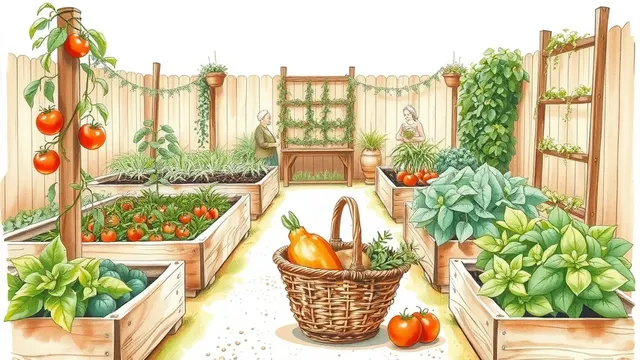
This is an example, not a rule. Sam, a renter with a small sunny yard, wants salads and something for summer dinners. They plant one row of leaf lettuce and a short row of radishes in early spring. After the last frost, they add one caged cherry tomato at the north end so it won't shade the rest, one zucchini in a corner and a block of bush beans. A pot of basil sits by the back door. That's five crops, mostly sown from seed, with harvests spread from spring into late summer.
Easy crops that still need a little attention
A few of the crops in the table have one or two quirks worth knowing about:
- Tomatoes need support and steady watering. Our full guide to growing tomatoes covers planting deep, staking and the problems to watch for.
- Peppers are compact and tidy but sulk in cold soil. Read how to grow peppers if you want to start them from seed or understand why they're slow early on.
- Zucchini grows fast, and the fruits get large if you miss a few days. Check plants often.
- Lettuce turns bitter and flowers (called bolting) when the weather heats up, so grow it in the cooler parts of the year.
Picking at the right time
Easy crops are only rewarding if you harvest them at their best. Beans are tender when they're slim and snap cleanly, radishes are crisp when they're small, and lettuce tastes sweetest picked in the cool of the morning. Many of these plants make more when you pick often. Our guide to harvesting vegetables explains the signs of ripeness crop by crop and how to store what you pick.
What to skip in your first year
Some crops are worth growing later, once you know your garden. Consider waiting on:
- Cauliflower and celery, which are fussy about temperature and water
- Melons in short-season areas, which need a long, warm summer
- Onions from seed, which take a long time and need precise timing
- Anything that needs a lot of space you don't have, like winter squash in a tiny yard
Where to get free help
You don't need to pay for advice to get started. Your state's Cooperative Extension service has local, research-based planting calendars, and many offices have Master Gardener volunteers who answer questions. Our guide to free gardening resources explains how to find yours. If you're starting from bare ground, our step-by-step guide to starting a garden covers choosing a spot, preparing the soil and planning your first season.
Something to do this weekend
Make a short list of five vegetables your household eats every week. Circle the ones that appear in the table above, then check how many hours of sun your planting spot gets on Saturday. By Sunday evening you'll have your first three crops picked out.
Want a step-by-step plan or guide?
Some people like the structure of a paid guide or set of plans. This button opens a third-party program from one of our advertising partners. Its claims are its own, not ours, so weigh them against our checklist for judging paid plans.
See the partner program →We may be paid when you click. The program shown can change. Read its terms before you buy anything. How this works
Frequently asked questions
What is the easiest vegetable for a total beginner?
Bush beans, radishes and leaf lettuce are some of the most forgiving. They grow from seed sown right in the soil, come up quickly and don't need staking or special care.
Can I grow easy vegetables in pots?
Yes. Lettuce, radishes, bush beans, herbs and compact tomato or pepper varieties all do well in containers with drainage holes, good potting mix and regular watering.
How many vegetables should I plant my first year?
Three to five kinds is plenty. A small, well-tended garden teaches you more than a big one that gets away from you by midsummer.