How to Keep Deer and Rabbits Out of a Garden
The most dependable way to keep deer and rabbits out of a garden is a fence built for the animal you have: low, fine mesh with a buried edge for rabbits, and a tall or double fence for deer. Less-tempting plants and repellents help too, especially when you rotate them, but none of them is a sure thing on its own. Start by confirming who is visiting, then layer two or three defenses.
Animal damage looks different from insect damage, so it gets its own guide in our Pests & Problems section. Here's how to read the signs, choose a fence and plan around the plants these animals like most.
Who is eating your garden?
| Clue | Rabbits | Deer |
|---|---|---|
| Cut height | Low, usually within reach from the ground | Higher, often knee to shoulder height or more |
| Cut shape | Clean, angled, like a knife cut | Ragged and torn, since deer have no upper front teeth |
| Droppings | Small round pellets in piles | Larger oval pellets in clusters |
| Tracks | Small paw prints, longer back feet | Pointed, split hoof prints |
| Timing | Dawn and dusk, often near cover | Night, dawn and dusk |
| Favorite targets | Young beans, peas, lettuce, tulips, seedlings | Hostas, tulips, many shrubs, tomatoes, beans, fruit trees |
Groundhogs, voles and squirrels can cause similar damage. If you're unsure, a cheap trail camera or a dusting of flour on a path can reveal tracks. Your local Cooperative Extension office can also help you identify animal damage common in your area.
Fencing basics
For rabbits
- Use wire fencing with small openings so young rabbits can't squeeze through.
- Make it at least as tall as a rabbit can stretch, plus some extra.
- Bury the bottom edge several inches, or bend it outward into an L shape along the soil, so rabbits can't dig under.
- Close any gaps at gates and corners.
For deer
Deer can jump high, so a fence meant for deer is usually much taller than a person. Other designs that many gardeners use:
- Two shorter fences a few feet apart. Deer don't like jumping into a narrow space they can't judge.
- Angled or slanted fences that make jumping awkward.
- Netting over small beds, which works well for a few raised beds in a deer-heavy yard.
- Enclosed raised beds with hoops and mesh covers.
Before you dig fence posts, call 811, the free national call-before-you-dig line, so buried utilities can be marked. Our guide to planting trees and shrubs explains how that works. If you rent, check with your landlord, and look up any local or HOA rules on fence height and materials.
Choose plants deer and rabbits like less
Plants with strong scents, fuzzy leaves, tough textures or milky sap tend to get eaten less often. Common examples many gardeners use include:
- Herbs such as lavender, rosemary, sage, thyme and mint
- Ornamentals such as daffodils, catmint, bee balm and lamb's ears
- Ornamental grasses and many ferns
"Resistant" doesn't mean "proof." In a dry year or a hard winter, hungry animals eat things they normally skip. Lists vary by region, so ask your Extension office or a local nursery which plants hold up in your area.
Native plants adapted to your region often handle local wildlife pressure better and recover more easily from a nibble. Our guide to native plants explains how to find them and why they support wildlife you do want.
Some popular deer-resistant plants are toxic to pets, including daffodils. If you have dogs or cats, check the ASPCA's plant lists; our pet-safe houseplants guide explains how to use them.
Repellents in general
Repellents work by smell, taste or both. They're sold as sprays, granules and hanging products.
- Follow the product label exactly, including where you can use it on food crops and how long before harvest.
- Reapply as the label says, especially after rain and on new growth.
- Rotate between types every so often, since animals can get used to one.
- Start before damage begins, when animals are first figuring out where to eat.
Motion-activated sprinklers and similar scare devices help in some yards, mostly for a while until animals get used to them.
Be wary of products that claim to keep every animal away for good. No repellent works that way. Our guide to spotting red flags in home and garden products explains what to watch for in big claims and suspicious reviews.
Worked example: a layered plan
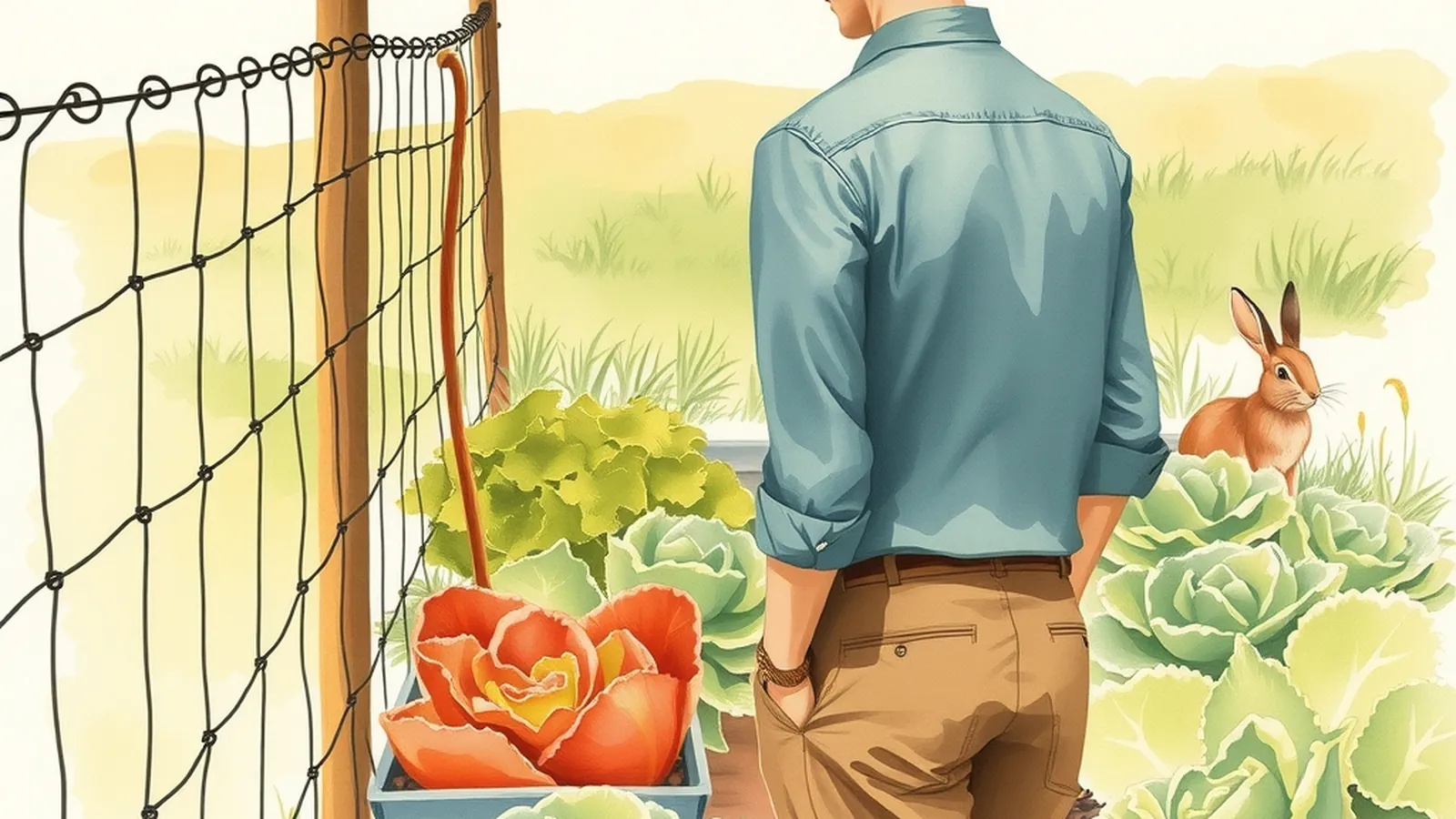
Example: Alex, 39, keeps losing bean seedlings and tulips at the edge of a suburban yard near a wooded lot.
- Alex checks the damage: low, clean cuts and small round droppings. Rabbits.
- They put fine wire fencing around the vegetable bed, bending the bottom edge outward and pinning it down.
- They move tulips into the fenced bed and plant catmint and lavender along the open border.
- A few weeks later, they notice torn leaves on a shrub at shoulder height. Deer are visiting too, so they add netting over the shrub and start a labeled repellent on a rotating schedule.
Alex keeps notes on what gets eaten each month, which helps them plan next year's fence.
Protecting other parts of the garden
Animals aren't the only problem in a busy garden. Rabbits and deer love tender new growth, and so do many diseases. If you notice spots or powdery coatings on leaves after animals chew them, our plant diseases guide covers removing damaged leaves and improving airflow.
Fencing and netting can also keep out some helpful visitors. Leave pollinator plants outside the fence where you can, and plant flowers that draw in the insects described in our beneficial insects guide.
If the holes are ragged but you find trails instead of tracks, the culprit is more likely slugs. Check the slugs and snails guide before you build a fence you don't need.
Something to do this weekend
Walk the edges of your garden looking for droppings, tracks and the height and shape of cuts. Decide whether you have rabbits, deer or both. Then protect your most-eaten bed first, with fencing for rabbits or netting for deer, and make a note to check it again in a week.
Want a step-by-step plan or guide?
Some people like the structure of a paid guide or set of plans. This button opens a third-party program from one of our advertising partners. Its claims are its own, not ours, so weigh them against our checklist for judging paid plans.
See the partner program →We may be paid when you click. The program shown can change. Read its terms before you buy anything. How this works
Frequently asked questions
How can I tell deer damage from rabbit damage?
Rabbits leave clean, angled cuts low to the ground, like a knife slice. Deer tear leaves and stems, leaving ragged edges, and they feed much higher, often from knee to shoulder height.
What is the most reliable way to keep deer and rabbits out?
A well-built fence is usually the most dependable option. Rabbit fencing needs small openings and a buried edge, while deer fencing needs to be tall or built in a way that deer avoid jumping.
Do deer-resistant plants really work?
They help, but no plant is deer-proof. Hungry deer will eat almost anything, so resistant plants work best as part of a plan that also includes fencing or repellents.