Do Grow Lights Work?
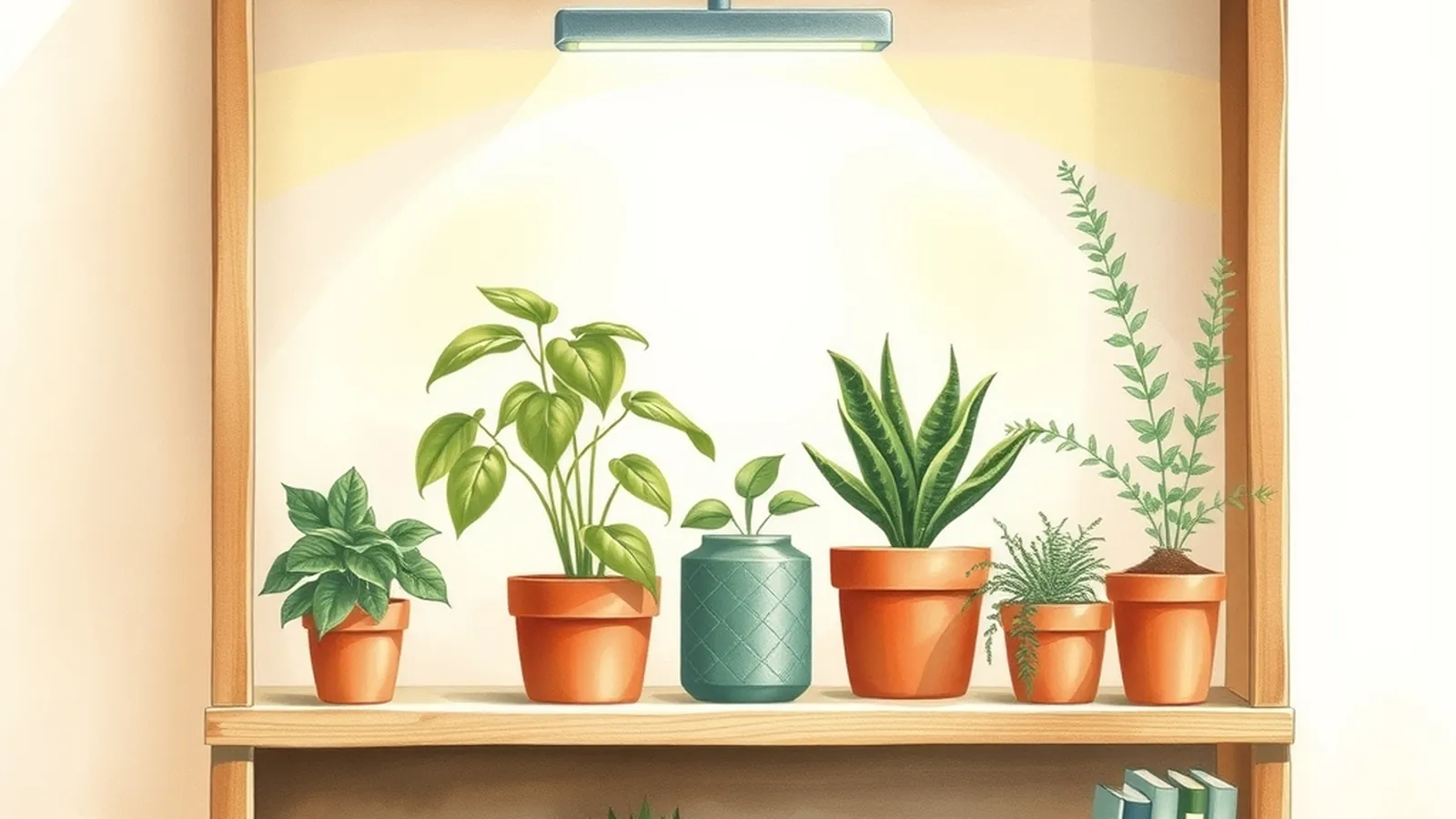
Yes, grow lights work. They give houseplants the light they can't get from a dim window, so plants grow sturdier, keep their color and stretch less. For most homes, a full-spectrum LED grow light placed at the distance its manufacturer recommends and run on a timer for a long day, then switched off overnight, is the simplest setup that works.
A grow light is the most useful extra in our Houseplants section for anyone with north windows, deep rooms or winter gloom. Here's how to choose and use one.
When a grow light makes sense
You probably don't need one if your plants already sit in good window light and look healthy. Consider one when:
- Your only free spot is far from a window or in a windowless room.
- Plants stretch, lean hard toward the glass or lose their variegation.
- Winter days are short and gray where you live.
- You want to grow light-hungry plants, like succulents, herbs or flowering plants, in a dim home.
- You're moving plants to high shelves to keep them away from pets.
Grow light types in plain terms
| Type | What it's like | Good for |
|---|---|---|
| LED bulbs | Screw into a regular lamp socket | One or two plants in an existing lamp |
| LED strips or bars | Slim lights that mount under shelves | Shelves of small plants, seedlings |
| LED panels | Flat panels that hang above plants | Groups of plants, larger collections |
| Clip-on lights | Flexible necks that clip to a table or shelf | A single desk or shelf plant |
| Fluorescent tubes | Older style, still used for seedlings | Shelves of small plants and seedlings |
Most home growers choose LEDs because they run cool, use relatively little electricity and last a long time. Check the packaging for words like "full spectrum" and for the manufacturer's guidance on hanging height and coverage area.
How far away to place the light
Distance matters a lot, because light weakens quickly as it spreads out. A light that's too far away does little. One that's too close can bleach or scorch leaves.
- Start with the manufacturer's recommended distance. It's usually printed on the box or in the instructions.
- Low-light plants like pothos and snake plants are happy with the light farther away.
- High-light plants like succulents and herbs usually want it closer.
- Watch the leaves. Pale, bleached or crispy patches on top leaves mean it's too close. Stretching and leaning mean it's too far.
- Raise the light as plants grow to keep the distance steady.
How many hours to run it
Plants need both light and darkness each day. For most foliage houseplants, a common starting point is around 12 hours of light, and some light-loving plants do well with a bit more. Plants that already get some window light may need only a few extra hours in the evening or on dark winter days.
Then adjust:
- Stretching or pale growth: add an hour or move the light closer.
- Bleached or crispy leaves: shorten the hours or raise the light.
- Healthy, compact new growth: keep doing what you're doing.
Use a timer
A plug-in outlet timer is the easiest way to keep a steady routine, and many grow lights come with one built in. Set it once and forget it. A consistent schedule works far better than switching lights on and off by hand whenever you remember.
Safety notes:
- Check the cord and plug for damage before use, and keep cords away from where you water.
- Use a properly rated outlet or power strip, and don't overload it.
- Keep water and spray bottles away from the light fixture.
- Follow the manufacturer's directions for mounting, and make sure fixtures are secure, especially overhead.
A simple setup example
Example: Avery has a windowless home office and wants a pothos and a small snake plant on a bookshelf. They mount a slim LED bar under the shelf above the plants, set it at the height the instructions suggest for low-light plants, and plug it into a timer set for the length of their workday plus a couple of hours. After a few weeks, Avery notices new leaves growing at a normal size and adjusts nothing.
For those two plants specifically, our guide to pothos and snake plant care covers how much light each one really wants and why both make good first plants under a grow light.
Grow lights for herbs and edibles
Herbs need far more light than most foliage houseplants, so a grow light often makes the difference between leggy, pale herbs and bushy ones. Our guide to growing herbs indoors covers which herbs do best inside and how to set lights for them. Gardeners who start vegetable seeds indoors use a similar setup, and our seed starting guide explains how close to keep lights for young seedlings.
Lights, heat and dry air
Grow lights, especially older types, can warm and dry the air around plants a little. If leaf tips start browning under the light, the problem may be dry air rather than the light itself. Our guide to humidity for plants explains simple ways to add moisture, such as grouping plants or using a humidifier.
Pets and high shelves
Moving plants up and out of reach is one of the best ways to protect pets, but high shelves are often darker. A light mounted on a top shelf lets you keep plants that are toxic to pets well away from paws and mouths. Our guide to pet-safe houseplants explains how to check plants against the ASPCA's lists before choosing what goes up high.
Be skeptical of big claims
Grow light marketing sometimes promises dramatic growth or uses technical numbers that are hard for a beginner to compare. Read reviews with care, check the return policy and look for clear information on coverage area and hanging height. Our guide to product red flags explains how to spot fake reviews and pressure tactics.
Something to do this weekend
Pick the dimmest spot where you'd like a plant. If you already have a lamp there, try a full-spectrum LED grow bulb in it and plug the lamp into an outlet timer. Set it to come on in the morning and switch off in the evening. Check the plant every week for a month and note whether new leaves look bigger and more compact.
Want a step-by-step plan or guide?
Some people like the structure of a paid guide or set of plans. This button opens a third-party program from one of our advertising partners. Its claims are its own, not ours, so weigh them against our checklist for judging paid plans.
See the partner program →We may be paid when you click. The program shown can change. Read its terms before you buy anything. How this works
Frequently asked questions
Can a regular light bulb work as a grow light?
A bright LED bulb close to a plant can help a little, but bulbs made for plants are designed to deliver more useful light. For anything beyond a small low-light plant, a dedicated grow light works better.
Should grow lights stay on all night?
No. Most plants need a daily period of darkness. Use a timer so the light runs during the day and switches off at night.
Are purple grow lights better than white ones?
Not necessarily. Purple lights emphasize red and blue light, while full-spectrum white lights look more natural in a living space and suit most houseplants well. Choose what you'll be happy to live with.