Pothos and Snake Plant Care
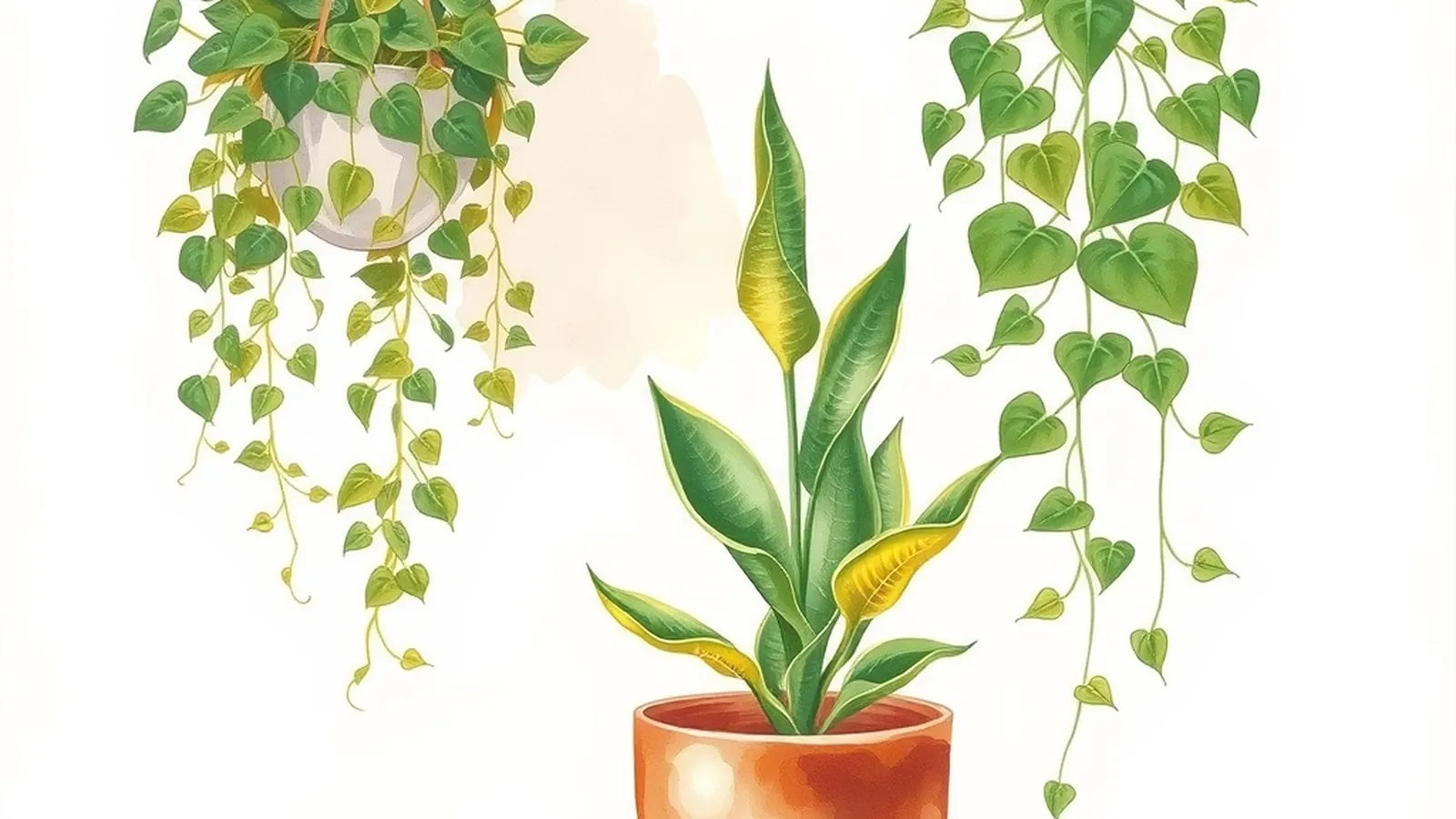
Pothos and snake plants are two of the easiest houseplants you can grow. Give pothos bright to medium indirect light and water when the top inch or two of soil is dry. Give snake plants medium to bright light, though they tolerate less, and water only when the soil is dry nearly to the bottom. Trim pothos to keep it full, and leave snake plants alone except to remove damaged leaves.
These two plants show up all over our Houseplants section because they're so forgiving. Here's a closer look at each.
Pothos and snake plant at a glance
| Pothos | Snake plant | |
|---|---|---|
| Growth habit | Trailing or climbing vines | Stiff, upright leaves |
| Best light | Bright to medium indirect | Medium to bright, some direct sun |
| Tolerates | Low light, slower growth | Low light, very slow growth |
| Water when | Top inch or two is dry | Soil is dry nearly all the way down |
| Soil | Standard indoor potting mix | Fast-draining mix, such as cactus mix |
| Humidity | Average home air is fine | Dry air is fine |
| Common problem | Leggy, bare vines | Rot from overwatering |
| Pets | On ASPCA toxic lists | On ASPCA toxic lists |
Pothos care
Light
Pothos grows fastest and fullest in bright, indirect light, such as a few feet from an east or west window. It also tolerates low light, but growth slows, leaves shrink and variegated types may turn mostly green. Keep it out of long periods of harsh direct sun, which can scorch leaves.
Water
Water when the top inch or two of soil is dry. Pothos often droops slightly when it's thirsty and perks up within hours of watering, which makes it a helpful teacher for beginners. Yellow lower leaves usually mean it's too wet.
Trimming
Pothos vines can grow long and bare over time. Trimming keeps the plant full:
- Choose a vine that has gone leggy.
- Cut just above a leaf, using clean scissors.
- The plant will usually branch from near the cut.
- Root the trimmed pieces in water and plant them back in the pot for a bushier look.
Our propagation guide walks through rooting cuttings in water or soil, and pothos is one of the best plants to practice on.
Climbing or trailing
Pothos trails naturally from shelves and hanging pots. If you'd like it to climb, give it a moss pole or a trellis and loosely tie the vines to it. Climbing vines often grow larger leaves.
Snake plant care
Light
Snake plants are famous for handling low light, but they grow best in medium to bright light, and many tolerate some direct sun. In very dim spots, they barely grow, and leaves can become floppy over time.
Water
This is where most snake plants run into trouble. Their thick leaves store water, so they need it far less often than leafy plants. Let the soil dry almost completely, then water thoroughly and drain. In winter, you may water only occasionally. Soft, mushy or wrinkled leaves at the base are a sign of rot.
Soil and pot
Use a fast-draining mix, such as a cactus mix, and a pot with a drainage hole. Snake plants like being a bit snug, so they don't need frequent repotting. Unglazed clay pots help the soil dry faster and add weight to keep tall plants from tipping.
Trimming
Snake plants don't need regular trimming. Remove damaged or browned leaves by cutting them off at the soil line with a clean knife. Healthy leaf pieces can be rooted as new plants, though cuttings of variegated types may grow back plain green.
Common problems and fixes
| Problem | Plant | Likely cause | Fix |
|---|---|---|---|
| Long bare vines | Pothos | Low light, no trimming | Trim and move closer to light |
| Yellow lower leaves | Pothos | Overwatering | Let soil dry more between waterings |
| Brown, crispy patches | Pothos | Underwatering or too much direct sun | Water more evenly; filter the light |
| Mushy base, falling leaves | Snake plant | Root rot from overwatering | Remove rotten parts; repot in dry, gritty mix |
| Wrinkled leaves | Snake plant | Very dry for too long, or damaged roots | Water thoroughly and check roots |
| Floppy leaves | Snake plant | Low light or overwatering | Move to brighter light; check roots |
Humidity and air
Neither plant needs extra humidity, which is part of why they suit busy homes. If you're also growing ferns or calatheas, our guide to humidity for plants explains how to keep humidity lovers happy without disturbing these drier-air plants.
Good next plants
Once you've had success with these two, you may want to branch out. Snake plants are a gentle introduction to the soak-and-dry rhythm that succulents need, and our guide to succulents indoors is a natural next step. For a wider look at forgiving options, our list of easy houseplants for beginners includes other plants that suit similar rooms.
Example: Quinn has a snake plant that looks great and a pothos that's gone long and scraggly. They trim the three longest pothos vines back by about half, root the pieces in a glass of water, and move the plant a few feet closer to the window. The snake plant stays exactly where it is, with water only when a chopstick pushed to the bottom comes out dry.
Pets
Both plants appear on the ASPCA's lists of plants toxic to dogs and cats. If you share your home with pets, hang the pothos high and place the snake plant where pets can't reach it. Our pet-safe houseplants guide explains what to do if a pet chews one.
No course required
You don't need a paid class to keep these plants alive. If you're tempted by an online plant care course, our guide to whether gardening courses are worth it suggests questions to ask first and free alternatives worth trying.
Something to do today
Check the soil in your pothos and snake plant with your finger or a chopstick. Water only the one that's ready by its own rule. If your pothos has any vine with long gaps between leaves, trim it just above a leaf and put the cutting in a glass of water on a bright windowsill.
Want a step-by-step plan or guide?
Some people like the structure of a paid guide or set of plans. This button opens a third-party program from one of our advertising partners. Its claims are its own, not ours, so weigh them against our checklist for judging paid plans.
See the partner program →We may be paid when you click. The program shown can change. Read its terms before you buy anything. How this works
Frequently asked questions
Why is my snake plant falling over?
Leaves that flop or bend at the base usually point to overwatering and soft, rotting roots, or to very low light that makes leaves weak. Check the roots and let the soil dry fully between waterings.
How do I make my pothos fuller?
Trim long vines just above a leaf to encourage branching, and plant the rooted cuttings back into the same pot. Brighter indirect light also helps it grow bushier leaves.
Are pothos and snake plants safe for pets?
Both appear on the ASPCA's lists of plants toxic to dogs and cats. If you have pets, keep them well out of reach and check our pet safety guide.