How to Care for Succulents Indoors
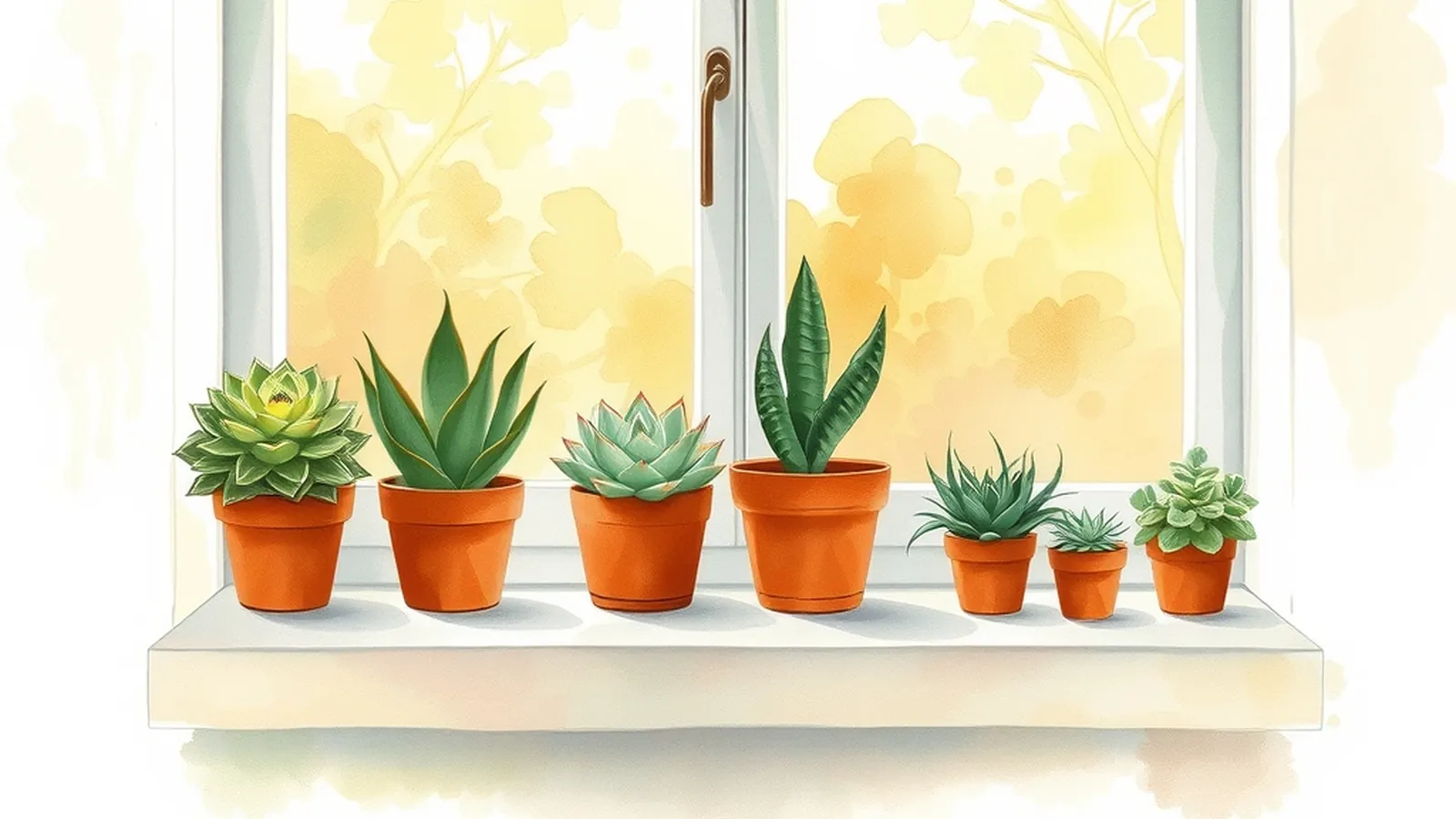
To care for succulents indoors, give them your brightest window, plant them in gritty, fast-draining cactus mix in a pot with a drainage hole, and water using the soak-and-dry method: water thoroughly, then wait until the soil is completely dry before watering again. Most indoor succulent problems come from too little light or too much water, so getting those two right solves nearly everything.
Succulents behave differently from the leafy plants in most of our Houseplants section, so this guide focuses on what's unique about them.
What makes succulents different
Succulents store water in thick leaves, stems or roots. In nature, many grow in bright, dry places with sharp-draining soil and long gaps between rains. Indoors, that means:
- They need much more light than typical foliage plants.
- Their roots rot quickly if soil stays wet.
- They prefer dry air and good airflow.
- Many slow down or rest in winter.
Light: as bright as you can manage
Light is the single biggest challenge indoors.
- Best spots: a south- or west-facing window in much of the US, or right up against an east window.
- Okay spots: bright windows with a few hours of direct sun.
- Struggling spots: north windows, rooms set back from glass and anywhere you'd call dim.
If you've read our guide to low light houseplants, you'll notice succulents sit at the opposite end of the light scale. Most of the plants on that page would scorch where succulents thrive, and most succulents would stretch where those plants are happy.
Moving to stronger light: if a succulent has been living in a dim spot, move it to direct sun gradually over a week or two. A sudden jump can sunburn leaves, leaving white, tan or brown patches.
Not enough window light? A grow light placed close to the plants and run on a timer can keep succulents compact.
Soil and pots
Regular potting mix holds too much water for most succulents.
- Use a cactus and succulent mix, or blend standard potting mix with extra perlite, pumice or coarse sand.
- Choose a pot with a drainage hole. This isn't optional for succulents.
- Unglazed clay pots wick moisture away and help soil dry faster.
- Size the pot snugly. A pot just a bit bigger than the root ball dries out more quickly.
- Skip decorative gravel glued on top, which traps moisture and hides the soil from view.
Watering: soak and dry
| Step | What to do |
|---|---|
| 1. Check | Push a finger or wooden skewer to the bottom. Water only if it's dry all the way down. |
| 2. Soak | Water slowly until it runs out the drainage hole. |
| 3. Drain | Let the pot drain fully and empty the saucer. |
| 4. Wait | Don't water again until the soil is fully dry. |
Signs of thirst include soft, slightly wrinkled leaves and leaves that look a bit deflated. Signs of too much water include translucent, mushy leaves, black stems and leaves that drop at the lightest touch. When in doubt, wait.
In winter, many succulents need water only occasionally, especially in cool rooms. Dormancy patterns vary by plant, so watch yours and adjust.
Common indoor succulents
| Succulent | Light | Notes |
|---|---|---|
| Jade plant | Bright, some direct sun | Grows into a small tree shape |
| Echeveria | Very bright, direct sun | Rosettes stretch fast in low light |
| Haworthia | Bright indirect | Handles a bit less light than most |
| Aloe | Bright, some direct sun | Pups can be separated to share |
| Gasteria | Bright indirect | Compact and slow |
| String of pearls | Bright indirect | Trailing; easy to overwater |
| Panda plant (kalanchoe) | Bright light | Fuzzy leaves |
Check any succulent against the ASPCA's lists if you have pets. Jade plants and aloe, for example, appear on its toxic lists. Our pet-safe houseplants guide explains how to look plants up.
Fixing a stretched succulent
Stretching, also called etiolation, happens when a succulent reaches for light. You'll see pale growth, long gaps between leaves and rosettes that open up and lean.
- Move the plant to brighter light or under a grow light.
- Decide whether to keep the stretched growth or reset the plant.
- To reset, cut the top rosette off with a clean blade, leaving an inch or two of stem.
- Let the cutting dry for a few days until the cut end seals over.
- Set it on top of dry cactus mix and wait for roots before watering lightly.
- The original stem will often sprout new rosettes.
Example: Devon's echeveria has grown tall and pale on a bookshelf across from a north window. They move the pot to a south-facing windowsill, easing it into full sun over two weeks. Once it's adjusted, Devon cuts off the stretched top, lets it dry for three days and replants it in fresh cactus mix. The old stem sends out two small new rosettes within a couple of months.
If you like the soak-and-dry rhythm
Snake plants follow a similar watering pattern and tolerate more shade, so they make a good companion if your bright window space runs out. Our guide to pothos and snake plant care compares the two. If you're still deciding what to grow, our list of easy houseplants for beginners shows where succulents fit among other forgiving plants.
Succulents outdoors
Many of the same principles apply in a yard: group plants by water needs, use well-drained soil and water deeply but rarely. Our guide to drought-tolerant landscaping explains how gardeners use those ideas on a bigger scale. Whether a succulent can live outside year-round depends on your winter temperatures and hardiness zone.
Something to do this weekend
Find the brightest window in your home and move your succulents there. Check each pot for a drainage hole, and repot any that are sitting in regular potting soil or a hole-free container into a cactus mix. Then push a skewer to the bottom of each pot and water only the ones that come out completely dry.
Want a step-by-step plan or guide?
Some people like the structure of a paid guide or set of plans. This button opens a third-party program from one of our advertising partners. Its claims are its own, not ours, so weigh them against our checklist for judging paid plans.
See the partner program →We may be paid when you click. The program shown can change. Read its terms before you buy anything. How this works
Frequently asked questions
How often should I water succulents indoors?
Water when the soil is completely dry, which may be every week or two in a bright summer window and much less often in winter. Always check the soil rather than counting days.
Why is my succulent growing tall and thin?
That's called stretching or etiolation, and it means the plant isn't getting enough light. Move it to your brightest window or add a grow light. The stretched part won't shrink back, but new growth will be more compact.
Can succulents live in a low light room?
Most can't do well there for long. A few, such as haworthia and some gasterias, tolerate somewhat less light, but most succulents need a very bright spot or a grow light.