How to Propagate Houseplants
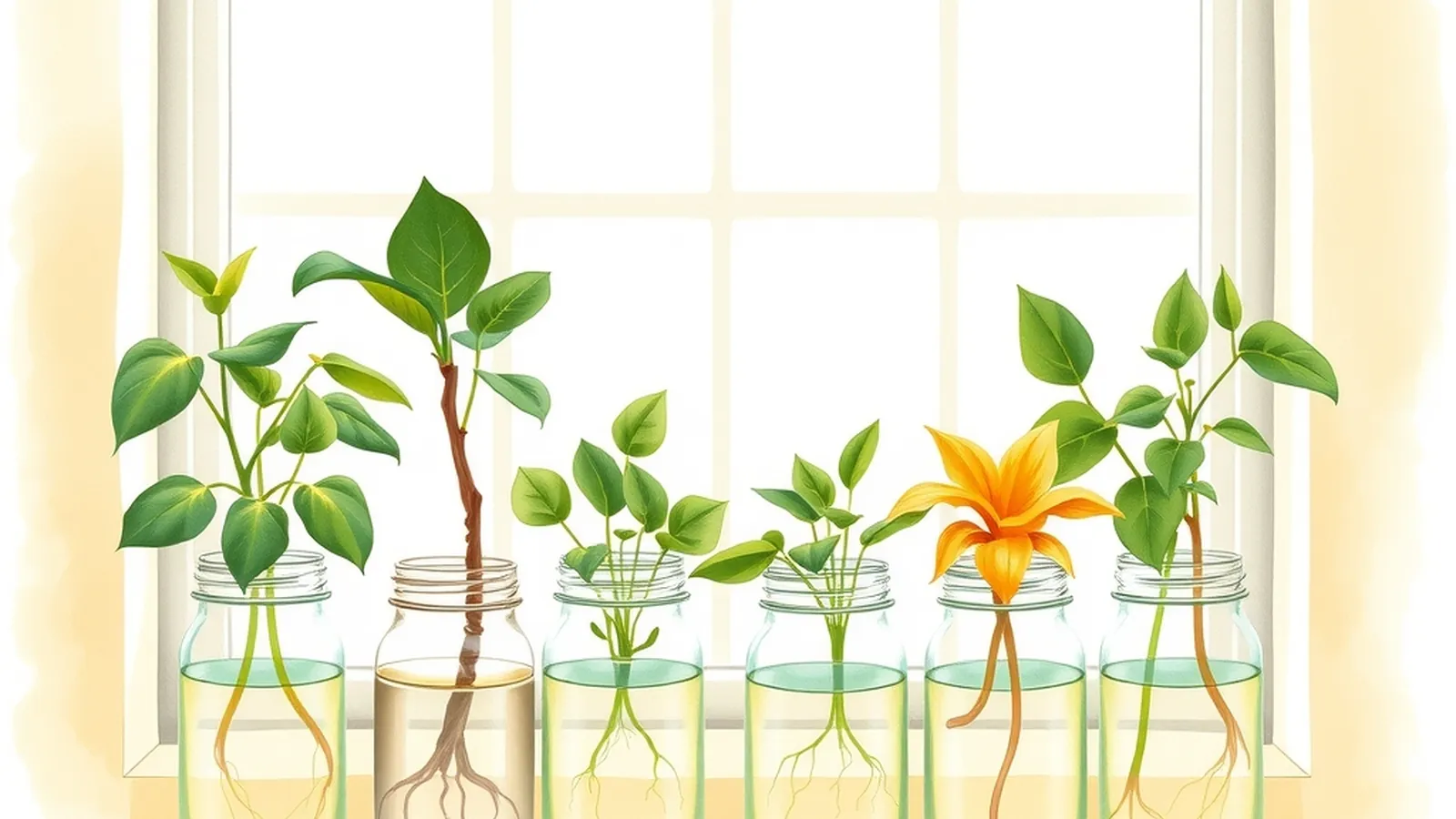
To propagate most houseplants, cut a healthy stem just below a node (the bump where a leaf joins the stem), remove the lowest leaves, and root it in water or moist potting mix in bright, indirect light. Clumping plants can be divided at repotting time, and some, like snake plants and succulents, grow new plants from single leaves. Pothos, philodendron and spider plants are the easiest to start with.
Propagation is the fun part of the care skills in our Houseplants section: free plants to keep, swap or give away. Here's how each method works.
What you need
- Clean, sharp scissors or pruners (wipe blades with rubbing alcohol between plants)
- Small glasses or jars for water rooting
- Small pots with drainage holes
- Fresh indoor potting mix
- A bright spot out of direct sun
Spring and summer are the best seasons, because plants are growing actively. Cuttings taken in winter usually root more slowly.
Choosing a healthy parent plant
Only take cuttings from plants that look vigorous. Before you cut, check closely:
- No sticky residue, webbing, white fluff or tiny moving dots under leaves.
- No yellowing that you haven't figured out yet.
- Firm stems with fresh growth.
Pests travel with cuttings, so you can easily spread a problem to every new pot. If you spot anything suspicious, our guide to houseplant pests helps you identify and treat it first. Likewise, if the parent plant has unexplained yellow leaves, our yellow leaves troubleshooting table can rule out a care problem before you multiply it.
Method 1: stem cuttings in water
Best for pothos, heartleaf philodendron, tradescantia, coleus and many other trailing plants.
- Find a stem with at least three or four leaves.
- Cut just below a node. On vining plants, you may see a small brown bump there, which is where roots will form.
- Remove the leaf closest to the cut end so no leaves sit underwater.
- Place the cut end in a glass of room-temperature water, with at least one node submerged.
- Set it in bright, indirect light.
- Change the water every few days, or whenever it looks cloudy.
- When roots are a couple of inches long, move the cutting into a small pot of moist mix.
Cuttings that live in water for many months can struggle when moved to soil, because water roots are different from soil roots. Plant them once roots are a few inches long, and keep the soil lightly moist for the first couple of weeks while they adjust.
Method 2: stem cuttings in soil
Best for plants that tend to rot in water, and for anyone who'd rather skip the transfer step.
- Take a cutting the same way as above.
- Fill a small pot with moist potting mix and poke a hole with a pencil.
- Insert the cutting so at least one node is below the surface, and firm the mix around it.
- Keep the soil lightly moist, not soggy.
- For extra humidity, loosely cover the pot with a clear plastic bag, opening it every day or two for fresh air.
- After a few weeks, tug gently. Resistance means roots have formed.
Method 3: division
Best for plants that grow in clumps: snake plants, peace lilies, cast iron plants, ZZ plants, spider plants and many ferns.
- Water the plant a day ahead.
- Slide it out of the pot.
- Look for natural sections, each with its own leaves and roots.
- Gently pull them apart with your hands, or cut through tight roots with a clean knife.
- Pot each section in its own container with fresh mix, at the same depth it grew before.
- Water and keep out of direct sun for a week.
Division fits naturally with a pot change. Our repotting guide covers choosing a pot size and mix for each new division.
Method 4: leaf cuttings
Best for snake plants, many succulents, African violets and some peperomias.
- Snake plant: cut a healthy leaf into sections a few inches long. Keep track of which end was the bottom, since only the bottom end will root. Let the cut ends dry for a day or two, then press them into gritty mix.
- Succulents: gently twist a plump leaf off the stem, let it dry for a few days until the end seals over, then lay it on top of dry cactus mix. Mist lightly once tiny roots appear.
- African violet: cut a leaf with an inch or so of stem and insert the stem into moist mix.
Leaf cuttings are slow. Patience matters more than technique here.
Propagation at a glance
| Plant | Easiest method | Notes |
|---|---|---|
| Pothos | Stem cutting in water | Roots form at nodes |
| Heartleaf philodendron | Stem cutting in water | Very similar to pothos |
| Spider plant | Plantlets | Pot up the babies while still attached, or snip and root |
| Snake plant | Division or leaf cuttings | Leaf cuttings of variegated types may grow back plain green |
| ZZ plant | Division | Leaf cuttings work but are very slow |
| Peace lily | Division | Split at repotting time |
| Jade and succulents | Leaf or stem cuttings | Let cuts dry before planting |
| Tradescantia | Stem cutting in water or soil | Roots quickly |
Example: Alex has a pothos with long, leggy vines. They trim four vines back by half, cut the trimmed pieces into segments with two or three leaves each, and root them in a glass on the kitchen windowsill. After the roots grow a couple of inches, Alex plants the cuttings back into the original pot, which makes the mother plant look much fuller.
Seeds are a different skill
Most houseplants are propagated from cuttings because seeds can be slow and may not grow true to the parent. Outdoors, gardeners often save seed from vegetables and flowers, and our guide to saving seeds explains which crops come back true and how to dry and store seed.
A note on buying "rare" cuttings
Online sellers sometimes offer rare cuttings with promises of quick growth or unusual colors that may not last. Ask about the seller's return policy and look for honest photos. Our guide to product red flags lists warning signs worth checking before you pay.
Something to do this weekend
Take two or three stem cuttings from your healthiest trailing plant. Put one in water and one in a small pot of moist mix, side by side in the same bright spot. Check them every few days. Comparing them will teach you which method suits you and your home.
Want a step-by-step plan or guide?
Some people like the structure of a paid guide or set of plans. This button opens a third-party program from one of our advertising partners. Its claims are its own, not ours, so weigh them against our checklist for judging paid plans.
See the partner program →We may be paid when you click. The program shown can change. Read its terms before you buy anything. How this works
Frequently asked questions
How long do cuttings take to root?
It varies by plant, warmth and light. Easy plants like pothos often show roots within a few weeks, while snake plant leaf cuttings can take a couple of months or more. Bright, indirect light and a warm room speed things along.
Is it better to root cuttings in water or soil?
Both work. Water lets you watch roots form, which is encouraging for beginners. Soil skips the step of moving the cutting later. Pick whichever you'll keep up with.
Do I need rooting hormone?
Not for easy plants like pothos, philodendron and spider plants. Some growers use it for slower plants. If you do, follow the product label.