Why Are My Plant's Leaves Turning Yellow?
Houseplant leaves usually turn yellow because of watering problems, most often too much water, followed by too little light, low nutrients, pests or a recent move. Look at which leaves are yellowing and how, check the soil moisture, and compare what you see to the table below. One old lower leaf going yellow is normal; several at once is a signal to investigate.
This troubleshooting method is one of the most-used tools in our Houseplants section. Work through it calmly, because most causes are fixable.
First, look closely
Before changing anything, note three things:
- Which leaves are yellow? Old lower leaves, new top leaves, or scattered all over?
- What does the yellow look like? Even all over, patchy, with brown edges, or with green veins?
- How does the soil feel? Push a finger two inches down. Wet, damp or bone dry?
Then think back. Did the plant recently move, get repotted, sit by a drafty window or go a long time without water? Changes in the last few weeks are often the answer.
The troubleshooting table
| What you see | Likely cause | What to do |
|---|---|---|
| Lower leaves yellow and soft; soil stays wet | Overwatering or poor drainage | Let soil dry more; check for a drainage hole; check roots for rot |
| Leaves yellow and crispy; soil bone dry | Underwatering | Water thoroughly; check more often |
| Pale yellowing all over; leggy stems | Too little light | Move closer to a window or add a grow light |
| Yellow or bleached patches on the sunny side | Too much direct sun | Move back from the window or filter with a sheer curtain |
| Older leaves pale yellow evenly; slow growth | Low nitrogen | Feed in spring and summer, following the label |
| Yellow between green veins on new leaves | Possible nutrient issue or soil pH problem | Repot in fresh mix; feed per label |
| Yellow speckles or stippling; fine webbing | Spider mites | Isolate and treat for pests |
| Yellow spots with sticky residue | Sap-feeding pests such as scale or mealybugs | Isolate and treat for pests |
| Sudden yellowing after a move | Shock from new conditions | Keep care steady and wait a few weeks |
| Yellow with brown, crispy tips; crust on soil | Too much fertilizer | Flush soil with water; stop feeding for a while |
| Yellow leaves after a cold snap | Cold drafts | Move away from drafty windows and doors |
Cause 1: too much water
This is the most common cause by far. Wet soil pushes out the air roots need, and roots that can't breathe start to rot. Damaged roots can't take up water, so the plant may even wilt while the soil is wet.
Check: slide the plant out of its pot. Healthy roots are firm. Rotting roots are dark, mushy and may smell sour.
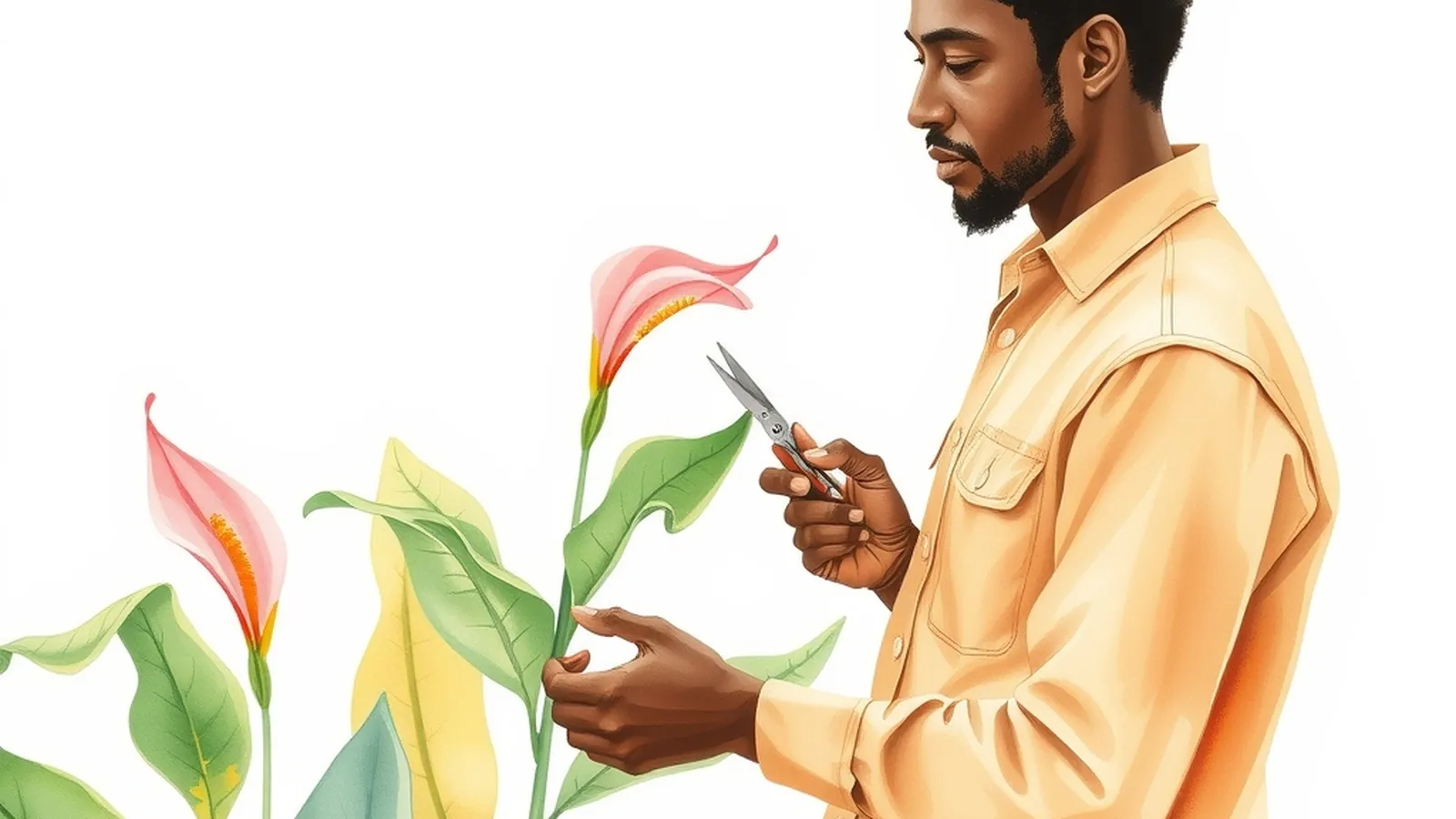
Fix: let the soil dry more between waterings. If many roots are rotten, trim them off with clean scissors and repot in fresh mix with good drainage. If you also see spots, fuzzy patches or blotches on the leaves, our guide to common plant diseases explains how leaf spots and mildews develop and how to keep them from spreading.
Cause 2: too little water
When soil dries out completely, the plant pulls moisture from older leaves first. They yellow, then go brown and crisp.
Fix: water slowly until it drains out the bottom. If water runs straight through dry, shrunken soil, soak the pot in a sink for 20 minutes, then drain.
Cause 3: not enough light
A plant in dim light can't make enough food to support all its leaves, so it drops the oldest ones. You'll often see long, stretched stems too.
Fix: move the plant gradually to a brighter spot, or add a grow light on a timer.
Cause 4: nutrients
Plants that have lived in the same soil for years can run low on nutrients, especially nitrogen, which shows as even yellowing of older leaves.
Fix: feed with a houseplant fertilizer during the growing season at the label rate, or repot in fresh mix. More fertilizer isn't better. The numbers on the label describe the nutrient balance, and our fertilizer basics guide explains how to read them.
Cause 5: pests
Sap-sucking insects drain leaves, leaving yellow speckles, spots or patches. Look under leaves and where leaves join stems.
Fix: move the plant away from others right away. Our guide to houseplant pests identifies the usual suspects, from spider mites to scale, and walks through the gentlest controls first.
Cause 6: natural aging and stress
Some yellowing is just a plant shedding old leaves to make room for new ones. A move from store to home, a repotting or a change in season can also cause a few yellow leaves while the plant adjusts. If new growth looks healthy, give it time.
A quick decision guide
- Check the soil. Wet? Treat for overwatering. Bone dry? Water thoroughly.
- Soil seems right? Check the light. Dim? Move it.
- Light seems right? Check under the leaves for pests.
- No pests? Think about feeding and recent changes.
Example: Morgan's peace lily has three lower leaves turning yellow and soft. The soil is still wet four days after watering, and the decorative pot has no drainage hole. Morgan moves the plant into a nursery pot with holes, trims off the yellow leaves and waits until the top inch dries before watering again. New leaves come in green over the next month.
Saving what you can
If a plant is badly damaged by rot and the roots can't be saved, you may still be able to rescue it. Healthy stems can often be rooted as new plants, and our propagation guide shows how to take cuttings from the parts that are still green and firm.
A note for pet owners
When you trim off yellow leaves, toss them in a covered bin rather than leaving them where a cat or dog can chew them. Some popular houseplants are toxic to pets, and our pet-safe houseplants guide explains how to check and what to do if a pet chews a plant.
Something to do today
Pick the plant in your home with the most yellow leaves and run through the quick decision guide above. Write down what you found for soil, light and pests. Make one change, just one, and give it two to three weeks before deciding whether it worked.
Want a step-by-step plan or guide?
Some people like the structure of a paid guide or set of plans. This button opens a third-party program from one of our advertising partners. Its claims are its own, not ours, so weigh them against our checklist for judging paid plans.
See the partner program →We may be paid when you click. The program shown can change. Read its terms before you buy anything. How this works
Frequently asked questions
Should I cut off yellow leaves?
Yes, once a leaf is mostly yellow it won't turn green again, and removing it keeps the plant tidy. Cut close to the stem with clean scissors. Fix the cause first, though, or new leaves will follow.
Is one yellow leaf a problem?
Usually not. Older, lower leaves naturally yellow and drop now and then as a plant grows. Pay attention if several leaves yellow at once or new leaves are affected.
Can too much fertilizer cause yellow leaves?
Yes. Excess fertilizer can damage roots, which often shows up as yellowing with brown, crispy tips. Flush the soil with plenty of water and hold off on feeding.