How to Raise Humidity for Plants
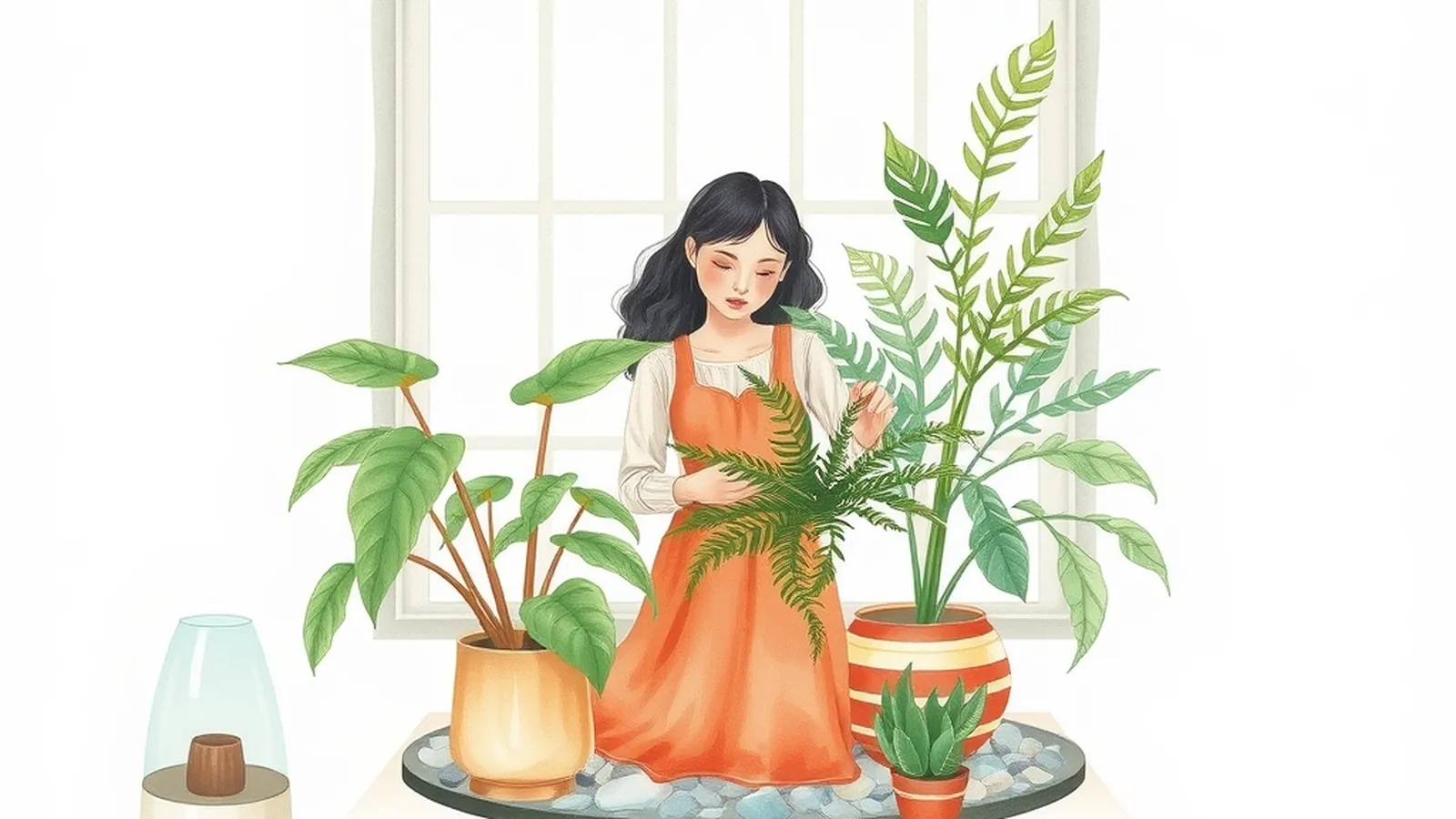
To raise humidity for houseplants, group plants together, set them on a tray of pebbles and water, or run a small humidifier nearby. Misting feels helpful, but it raises humidity for only a few minutes. Most easy houseplants handle ordinary indoor air fine, so save these steps for humidity lovers like ferns, calatheas and prayer plants, especially in winter when heating dries the air.
Humidity is one of the finer points in our Houseplants section. It matters less than light and watering, but for certain plants it's the missing piece.
Signs a plant wants more humidity
Dry air shows up in a few typical ways:
- Brown, crispy leaf tips and edges, especially on thin-leaved plants
- New leaves that get stuck or tear as they unfurl
- Leaves curling inward
- Flower buds that dry up and drop before opening
- Spider mites, which favor warm, dry conditions
Brown tips can also come from uneven watering or too much fertilizer, so check those first. If watering is on track and the problem gets worse when the heat comes on, dry air is a likely cause.
Which plants care about humidity
| Usually fine in dry indoor air | Usually prefer more humidity |
|---|---|
| Snake plant | Boston fern and maidenhair fern |
| ZZ plant | Calathea and prayer plants |
| Succulents and cacti | Some orchids |
| Jade plant | Fittonia (nerve plant) |
| Ponytail palm | Bird's nest fern |
| Pothos and heartleaf philodendron (adaptable) | Alocasia |
Two of the most popular beginner plants sit happily on the dry side. Our guide to pothos and snake plant care explains why both adapt to typical home air with little fuss, which makes them good choices if you'd rather not manage humidity at all.
Succulents go further and actually prefer dry air. Raising humidity around them can encourage rot, so keep them in a separate spot from your ferns. Our succulents indoors guide explains their very different needs.
How to measure humidity
An inexpensive digital hygrometer tells you how humid a room actually is, and many small weather stations include one. Check it in a few rooms and at different times of year. You may find your bathroom is far more humid than your living room, or that winter air drops off sharply once the heat comes on.
Ways to raise humidity, from simplest to most effective
1. Group plants together
Plants release moisture through their leaves. Clustering several plants creates a slightly more humid pocket around them. It's free and takes a minute.
2. Use a pebble tray
Fill a shallow tray with pebbles or gravel, add water to just below the top of the pebbles, and set the pot on top. As the water evaporates, it adds a little moisture right around the plant. Keep the pot's base above the waterline so roots don't sit in water, and refill the tray regularly. Rinse the tray now and then to keep it clean.
3. Pick a naturally humid room
Bathrooms with a window and kitchens are often more humid than other rooms. If a bathroom gets enough light, it can be a great home for ferns. A spot that's dark or windowless will need a grow light, and our grow lights guide explains how to set one up in a room like that.
4. Run a humidifier
A small room humidifier is the most effective option for a collection of humidity-loving plants.
- Place it a few feet from the plants, not blowing directly onto leaves.
- Follow the manufacturer's cleaning directions closely, since standing water in the tank can grow mold and bacteria.
- Empty and refill with fresh water as the instructions say.
- Turn it down or off if windows start fogging or walls feel damp.
5. Use a cabinet or terrarium
Enclosed glass cabinets and terrariums trap moisture for small humidity lovers like fittonia and miniature ferns. They need bright, indirect light and occasional airing out to keep mold from building up.
What misting does and doesn't do
Misting is popular, but it's mostly a ritual:
- It does: clean dust off leaves, and give a very short humidity boost.
- It doesn't: keep humidity raised for more than a few minutes.
- It can: encourage leaf spots on some plants if leaves stay wet, especially in cool rooms with little airflow.
If you enjoy misting, do it in the morning so leaves dry by evening, and don't rely on it as your only humidity strategy.
Keep air moving and walls dry
More moisture in the air is good for some plants but not for your home if it builds up. Watch for condensation on windows, damp spots on walls or a musty smell. According to the EPA, controlling moisture is the key to controlling mold, and our guide to mold and mildew explains how to spot problems early and when a larger area needs professional help.
- Open a door or run a fan occasionally near plant groups.
- Leave space between pots and walls.
- Wipe condensation from windowsills.
- Keep humidifier output modest in small rooms.
Example: Jamie keeps a calathea and a Boston fern in a living room with a forced-air heater. Every winter, leaf edges turn crispy. They move both plants together onto a wide pebble tray near a bright window, add a small humidifier a few feet away, and stop misting. They wipe the windowsill each morning when it fogs. By late winter, new leaves unfurl without brown edges.
Seasonal humidity checklist
| Season | What to watch | What to do |
|---|---|---|
| Fall | Heating comes on | Start grouping humidity lovers; set up trays |
| Winter | Driest indoor air | Run a humidifier if needed; keep plants away from vents |
| Spring | Heating turns off | Ease off the humidifier |
| Summer | Air conditioning dries air | Check tips on ferns; keep trays filled |
Something to do today
Look at your plants for brown, crispy tips. Make a list of which ones have them and check them against the table above. Group the humidity lovers together on one tray in a bright spot, and move any succulents to a separate, drier shelf.
Want a step-by-step plan or guide?
Some people like the structure of a paid guide or set of plans. This button opens a third-party program from one of our advertising partners. Its claims are its own, not ours, so weigh them against our checklist for judging paid plans.
See the partner program →We may be paid when you click. The program shown can change. Read its terms before you buy anything. How this works
Frequently asked questions
Does misting houseplants increase humidity?
Only briefly. The water on the leaves evaporates quickly and the air goes back to where it was. A humidifier or grouping plants does far more.
Which houseplants need high humidity?
Many ferns, calatheas, prayer plants, some orchids and thin-leaved tropicals prefer more moisture in the air than a heated home usually has. Succulents, cacti, snake plants and ZZ plants are happy in dry air.
Can too much humidity be a problem?
Yes. Very damp air with poor airflow can encourage mold on walls, windowsills and soil. Keep air moving and fix any condensation or leaks you notice.