A Cleaning Schedule for a Busy Household

A good cleaning schedule for a busy household breaks the work into small daily habits, one or two focused tasks per weekday, a monthly round of bigger jobs and a short seasonal list. That way no single day eats your whole evening, and nothing goes untouched for so long that it becomes a weekend project. Below you'll find each layer, a sample week and a copy-ready list.
This schedule is the backbone of our Clean & Organized Home section, where the other guides go deeper on specific rooms and supplies. Treat everything here as a starting point and adjust it to your home, your pets and your hours.
Why a schedule beats cleaning when it looks bad
When you clean only once things look messy, every session is a big one. Grime has had time to bake on, clutter has spread, and you need a free afternoon you probably don't have. A schedule flips that. Most surfaces get wiped before buildup starts, so each job is quicker and easier.
A schedule also takes the decision out of your hands. Instead of standing in the hallway wondering where to start, you look at the list, see "Tuesday: bathrooms" and get going.
Layer one: the daily reset
These are the tasks that keep a home livable. Aim for 10 to 20 minutes, often split between morning and evening.
- Wash dishes or load and run the dishwasher.
- Wipe kitchen counters and the stovetop after dinner.
- Put away anything left out in shared rooms.
- Sort mail as it comes in and recycle what you don't need.
- Make the bed, or at least pull the covers up.
- Do a quick sweep of the kitchen floor if it gets crumbs.
If that feels like too much, keep just two: dishes and counters. Those two prevent most of the mess that piles up in a busy week.
Layer two: one focus per weekday
Instead of a long Saturday of chores, give each weekday a single focus. Each one should take roughly 20 to 30 minutes.
| Day | Focus | What it covers |
|---|---|---|
| Monday | Kitchen | Wipe appliance fronts, clean the microwave, take out trash and recycling |
| Tuesday | Bathrooms | Toilet, sink, mirror, quick shower wipe, fresh towels |
| Wednesday | Floors | Vacuum main rooms, mop hard floors |
| Thursday | Dusting | Shelves, TV stand, window sills, light switches and door handles |
| Friday | Laundry and linens | Wash sheets and towels, put clean clothes away |
| Weekend | Catch-up only | Anything you skipped, plus errands and rest |
Move the days around to fit your life. If trash pickup is on Wednesday, put the kitchen focus on Tuesday night. The point is one manageable job at a time.
Layer three: monthly tasks
Once a month, add a few jobs that don't need weekly attention. Spread them across the four weekends so each one stays short.
- Clean inside the fridge and toss old leftovers and condiments.
- Wash the shower curtain liner or scrub glass doors.
- Vacuum under couch cushions and beds.
- Wipe baseboards and door frames in the busiest rooms.
- Clean out the vacuum filter and empty or wash the canister.
- Wash the kitchen trash can.
- Check under sinks for drips or dampness.
That last one matters more than it seems. A slow drip under the sink can lead to mold. If you find moisture, our guide to mold and mildew explains why the water source comes first.
Layer four: seasonal tasks
A few times a year, take on the jobs that keep a home fresh over the long run. Pair them with the seasons so you remember.
- Spring: wash windows inside, launder curtains, deep clean the kitchen, swap winter clothes out.
- Summer: clean ceiling fans, wipe outdoor furniture, clear out the garage or entry closet.
- Fall: wash bedding like duvets and blankets, clean behind the fridge and stove, swap summer clothes out.
- Winter: declutter one room, clean light fixtures, wipe down cabinets inside.
Seasonal cleaning is also a good moment to handle the house itself, not just its surfaces. Our home maintenance checklist covers furnace filters, gutters and smoke alarm testing, and it lines up neatly with this list.
A copy-ready cleaning list
Write or print this somewhere you'll see it, like the inside of a cabinet door.
Every day: dishes, counters, put things away, sort mail.
Weekly: Monday kitchen, Tuesday bathrooms, Wednesday floors, Thursday dusting, Friday laundry and linens.
Monthly: fridge, shower curtain or doors, under cushions and beds, baseboards, vacuum filter, trash can, check under sinks.
Seasonal: windows and curtains, ceiling fans and fixtures, behind appliances, closet swaps, one big declutter.
Example: a household that tried it
This is a fictional example. Jordan shares a two-bedroom apartment with a roommate and a cat. They both work long days, and cleaning used to happen in one frustrating Sunday marathon. They split the weekday focus list by task instead of by day: Jordan takes kitchen, floors and laundry, and their roommate takes bathrooms and dusting. The daily reset is shared, with whoever cooks leaving the dishes to the other person.
After a month, they noticed that floors needed two passes a week because of cat hair, so they added a quick Saturday vacuum. They also realized nobody was cleaning the fridge, so it went on the first Saturday of each month. The schedule changed, but the Sunday marathon went away.
Make the schedule fit your home
A few adjustments make a schedule easier to keep:
- Pets: add an extra vacuum day and wash pet bedding with your sheets. Store all cleaning products where pets can't reach them.
- Small kids: focus on floors and high-touch surfaces, and keep every cleaner locked or up high.
- Very small spaces: combine Monday and Tuesday into a single "wet rooms" night.
- Low-energy weeks: keep the daily reset and drop the rest without guilt.
If you keep running out of time, the problem is often too much stuff rather than too little cleaning. Clearing surfaces makes every task faster, which is why we suggest pairing this schedule with our room-by-room decluttering guide.
Keep your supplies simple
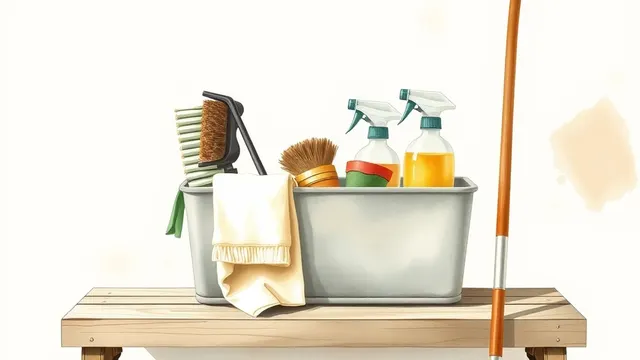
A schedule only works if the supplies are easy to grab. A small caddy with an all-purpose cleaner, a few microfiber cloths, a scrub brush and a toilet brush covers most weekly tasks. Our cleaning supplies list walks through a short starter kit and what you can skip. If you'd like to use milder products for routine jobs, the guide to natural cleaning explains where vinegar, baking soda and plain soap work, and where they don't.
Whatever you use, follow the product label, use one product at a time and keep the room ventilated.
Something to do this weekend
Pick your five weekday focus days and write them on a sticky note or the inside of a cabinet. Then do just the daily reset each evening next week, plus the one focus task. At the end of the week, cross off what worked, move what didn't, and you'll have a schedule built for your real life.
Want a step-by-step plan or guide?
Some people like the structure of a paid guide or set of plans. This button opens a third-party program from one of our advertising partners. Its claims are its own, not ours, so weigh them against our checklist for judging paid plans.
See the partner program →We may be paid when you click. The program shown can change. Read its terms before you buy anything. How this works
Frequently asked questions
How long should cleaning take each day?
For most households, a short daily reset of 10 to 20 minutes covers dishes, counters and clutter. The bigger jobs go on a weekly or monthly rotation so no single day gets overloaded.
What if I miss a day on my cleaning schedule?
Skip it and pick up with the next task on the list. A schedule is a guide, not a test, and trying to catch up on everything at once is how people burn out and quit.
How do I split cleaning with roommates or a partner?
Divide by task rather than by day, so each person owns certain jobs every week. Write the split down where everyone can see it and revisit it after a month.