Cleaning Supplies List for a New Home
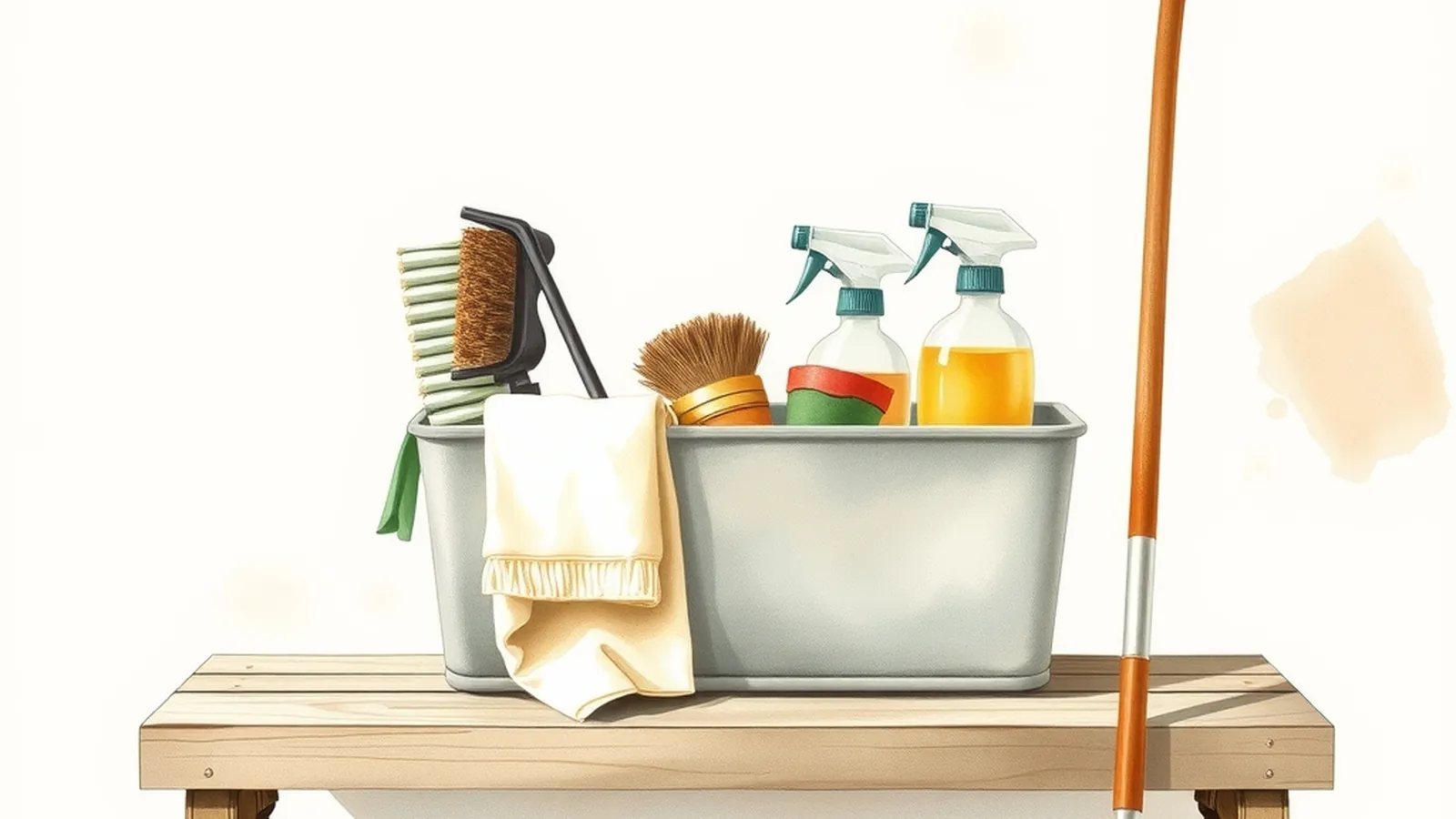
A good starter cleaning kit for a new home is short: an all-purpose cleaner, dish soap, a toilet cleaner and brush, a glass cleaner, a disinfectant for when you need it, a stack of microfiber cloths, a scrub brush, a sponge, a broom or vacuum, a mop and bucket, rubber gloves and a caddy to carry it all. Start there and add only what your home actually calls for.
This list rounds out our Clean & Organized Home section. Moving into a new place is a great time to start fresh rather than haul over half-empty bottles you never used.
The short starter kit
| Item | What it's for | Notes |
|---|---|---|
| All-purpose cleaner | Counters, appliance fronts, sealed surfaces | Check it's safe for your countertop |
| Dish soap | Dishes, plus a few drops in water for many surfaces | One of the most versatile products |
| Toilet bowl cleaner and brush | The toilet | Store the brush in its holder |
| Glass cleaner or diluted vinegar | Mirrors, windows, faucets | Many glass cleaners contain ammonia |
| Registered disinfectant | Raw meat spills, sickness, high-touch spots | Follow the label for contact time |
| Microfiber cloths | Dusting, wiping, polishing | Get a pack in two colors |
| Scrub brush and old toothbrush | Grout, sinks, corners | A stiff brush is useful for tile |
| Non-scratch sponge | Dishes, stovetops, tubs | Replace or wash often |
| Broom and dustpan or vacuum | Floors | A vacuum also helps with rugs and upholstery |
| Mop and bucket | Hard floors | A flat mop with washable pads is easy to store |
| Rubber gloves | Protecting your hands | Longer cuffs help with toilet and mold jobs |
| Caddy | Carrying supplies room to room | Keeps the kit together |
Why microfiber earns its place
Microfiber cloths are made of very fine fibers that grab dust and grime well, often with just water or a little cleaner. They're reusable, which cuts down on paper towels.
To get the most from them:
- Use one color for kitchens and counters and another for bathrooms and toilets.
- Dampen them lightly for most wiping, and use dry for dusting.
- Wash them with other lint-free items, without fabric softener.
- Air dry or tumble dry on low.
Our laundry basics guide explains sorting, temperatures and drying if you want to wash cloths alongside towels.
What you can skip at first
Plenty of products are nice to have but not needed on day one:
- Separate sprays for every room. One good all-purpose cleaner covers most jobs.
- Single-use wipes and disposable mop pads, if washable ones work for you.
- Single-purpose gadgets that do one small job a regular cloth or brush already handles.
- Strong-scented air fresheners, which cover smells instead of removing their source.
- Products that promise to clean everything effortlessly. Our guide to red flags in home and garden products explains how to judge big claims.
Safety rules for your kit
- Never mix products. Bleach combined with ammonia or acids such as vinegar creates toxic gases. Our natural cleaning guide covers this in detail.
- Follow every label, including protective gear and ventilation instructions.
- Keep products in their original containers.
- Store everything up high or behind a latch, away from children, pets and food.
- Write the Poison Help number, 1-800-222-1222, inside the cabinet where you keep cleaners.
Cleaning tools vs repair tools
Your cleaning kit and your tool kit are two different things, but they often share a closet. A few repair basics, like a screwdriver, a tape measure and a flashlight, help with jobs like tightening a loose cabinet handle or checking under the sink for leaks. Our beginner tool kit guide explains what to start with for simple repairs and how to store tools safely.
Where to keep it
- Main caddy: under the kitchen sink or in a hall closet.
- Bathroom set: a toilet brush, a cloth and a small spray bottle under each bathroom sink, so quick cleans happen.
- Floor tools: a closet, a wall hook or a narrow gap beside the fridge.
Keeping supplies close to where you use them makes it far more likely you'll do the quick tasks on your cleaning schedule.
Example: setting up a first apartment
This is a fictional example. Jesse moved into their first apartment with a box of half-used products from a previous roommate. Before buying anything, they sorted the box, kept a working all-purpose cleaner and dish soap, and safely disposed of an unlabeled bottle following local waste rules. They bought microfiber cloths in two colors, a toilet brush, a flat mop and a caddy, and they skipped room-specific sprays. The kit fits under the kitchen sink.
Before you buy, clear out
If you're moving, it helps to go through old cleaning products along with everything else. Toss empty or unlabeled bottles following local rules, and pass along unopened products you won't use. Our decluttering guide has a keep, donate and toss system that works for supplies too.
Nice upgrades once you know your home
After a month or two, you'll have a better sense of what your space needs. These are worth adding only if they fit:
- A handheld vacuum if you have pets, stairs or a car you clean often.
- A squeegee for glass shower doors and windows.
- A step stool with a wide top for reaching high shelves and fixtures safely.
- An extendable duster for ceiling fans and corners.
- A small spray bottle for diluted vinegar, clearly labeled.
- A grout brush if your bathroom has a lot of tile.
Caring for your tools
Clean tools clean better. Rinse and air dry mop pads, brushes and sponges after use, and replace sponges when they smell or fall apart. Empty and wipe your vacuum's canister and wash or replace its filter as the manual directs. Hang brooms and mops off the floor so the bristles and pads keep their shape.
Something to do today
Pull out every cleaning product and tool you own and compare them to the starter kit table. Circle the gaps, note any duplicates to use up first, and store the rest in one caddy. Write the Poison Help number on a piece of tape inside the cabinet door.
Want a step-by-step plan or guide?
Some people like the structure of a paid guide or set of plans. This button opens a third-party program from one of our advertising partners. Its claims are its own, not ours, so weigh them against our checklist for judging paid plans.
See the partner program →We may be paid when you click. The program shown can change. Read its terms before you buy anything. How this works
Frequently asked questions
What cleaning supplies do I need for my first apartment?
Start with an all-purpose cleaner, dish soap, a toilet cleaner and brush, a glass cleaner or diluted vinegar, microfiber cloths, a scrub brush, a broom or vacuum and a mop. Add other items only once you know you need them.
How do I wash microfiber cloths?
Wash them with other microfiber or towels that don't shed lint, using regular detergent and no fabric softener, which can clog the fibers. Air dry or tumble dry on low heat.
Do I need a separate disinfectant?
Keep one registered disinfectant for times when germs matter, such as after handling raw meat or when someone is sick. Use it exactly as the label directs, including how long the surface must stay wet.