How to Compost in an Apartment
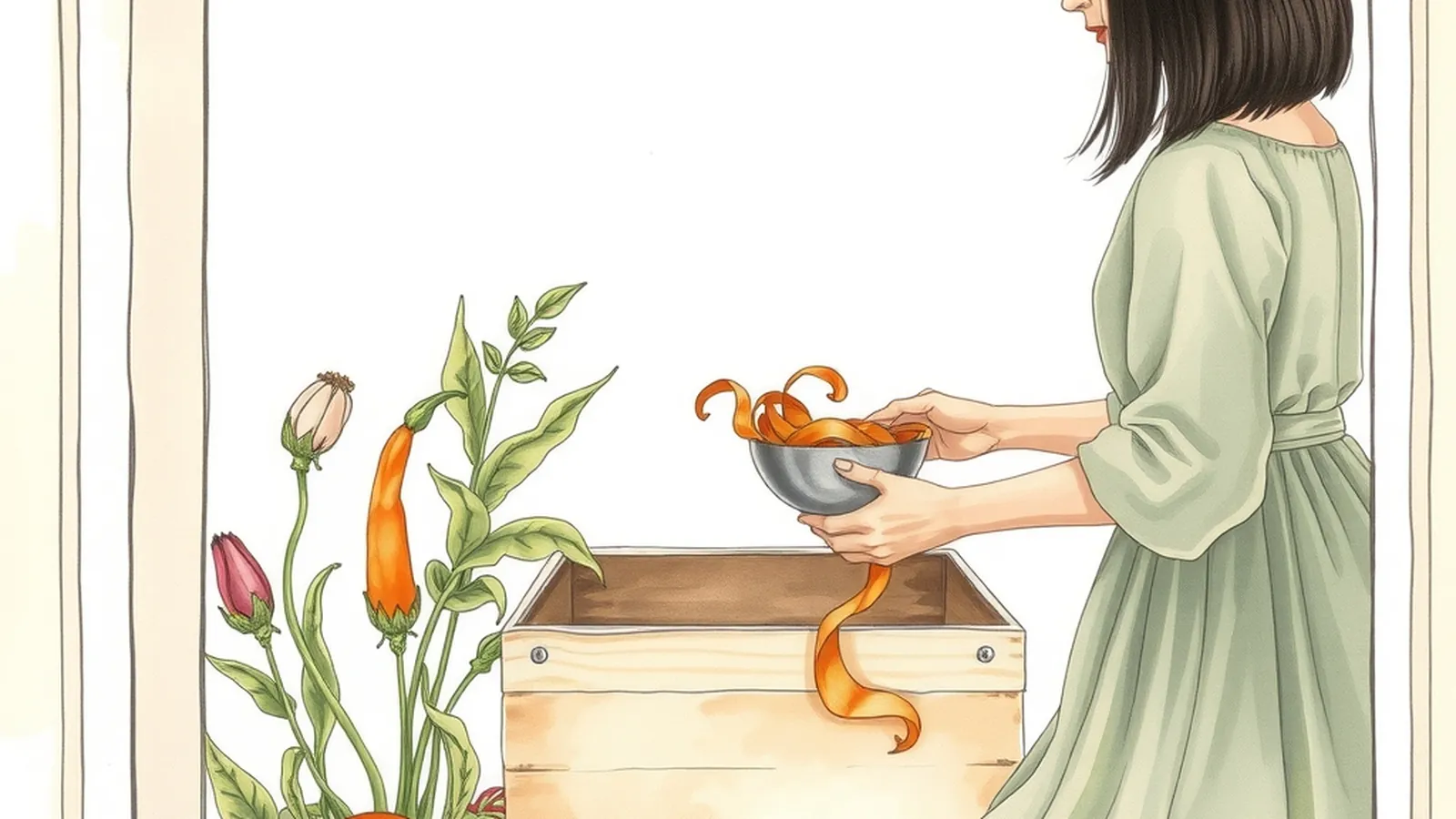
To compost in an apartment, pick one of three approaches: a small worm bin that turns scraps into rich castings, a sealed bokashi bucket that ferments food waste, or a freezer bag of scraps you take to a community drop-off. All three can work in a small kitchen without smells if you balance wet scraps with dry material and don't overload the system.
Composting fits naturally into our Small Spaces section, because the finished material feeds the pots and planters you're already growing in. Here's how each option works.
Three options compared
| Method | Space needed | What it takes | What you get |
|---|---|---|---|
| Worm bin | Under a sink, in a closet or on a balcony | Fruit and vegetable scraps, coffee grounds, paper bedding | Worm castings for pots |
| Bokashi bucket | A spot by the trash can | Most food scraps plus a bran inoculant | Fermented scraps that must be buried or added to compost to finish |
| Freezer drop-off | A container in the freezer | Whatever your local site accepts | Nothing to manage at home |
If you have a yard or shared outdoor space, a regular bin or pile is also an option. Our guide on how to compost for beginners covers greens and browns, bins vs piles and fixing smells.
Option 1: A worm bin
Worm composting uses a type of red worm that lives in decaying matter near the surface. They eat scraps and leave behind castings, which you can mix into potting soil.
Setting one up:
- Use a plastic or wooden bin with a lid and small air holes. Add drainage holes and a tray if you want to catch liquid.
- Fill it with damp, shredded newspaper or cardboard as bedding. It should feel like a wrung-out sponge.
- Add a handful of soil or finished compost to introduce helpful microbes.
- Add composting worms, which you can buy from garden suppliers or get from a friend's bin. Ordinary earthworms from the yard aren't the right type.
- Bury small amounts of chopped scraps under the bedding.
Ongoing care:
- Feed a little at a time and wait until most of it is gone before adding more.
- Keep the bin out of hot sun and freezing cold; room temperature indoors works well.
- Add fresh bedding when the surface looks wet.
- Every few months, push finished castings to one side, add fresh bedding and food to the other side, and let worms migrate before you harvest.
Option 2: A bokashi bucket
Bokashi is a fermenting method rather than true composting. You layer food scraps in an airtight bucket with a bran that's been treated with helpful microbes, press out the air, and keep the lid sealed. Many people can add a wider range of scraps this way than in a worm bin, but check the instructions that come with your bran.
In general terms:
- Add scraps to the bucket, sprinkle bran over them and press down.
- Close the lid tightly every time.
- Drain the liquid from the spigot every few days, if your bucket has one.
- When the bucket is full, let it sit sealed for a couple of weeks.
The fermented material isn't finished compost yet. It needs to be buried in soil, mixed into a large planter of soil and left to break down, or added to an outdoor compost pile or a community site that accepts it. That last step is the catch for many apartment dwellers, so plan where it will go before you start.
Option 3: Freeze and drop off
If you don't want to manage anything at home:
- Keep a lidded container or bag in the freezer. Freezing stops smells and fruit flies.
- When it's full, take it to a drop-off site. Many cities, community gardens and farmers markets run them.
- Check what each site accepts. Some take only fruit and vegetable scraps; others take more.
Your city or county website, or your local Cooperative Extension office, can point you to options. Our page on free gardening and home help explains how to find Extension and Master Gardener volunteers near you.
Troubleshooting
| Problem | Likely cause | Fix |
|---|---|---|
| Rotten smell | Too much food or too wet | Stop feeding for a week, add dry bedding |
| Fruit flies | Scraps on the surface | Bury scraps under bedding; freeze scraps first |
| Worms trying to escape | Too wet, too acidic or too hot | Add bedding, cut back on citrus, move to a cooler spot |
| Nothing breaking down | Too cold or too dry | Move indoors, mist bedding lightly |
| Mold on bokashi | Some white mold can be normal; fuzzy dark mold often means air got in | Seal the lid tightly and press out air each time |
Wash your hands after handling compost and bins.
Using what you make
- Mix worm castings into potting mix when you plant or repot, or spread a thin layer on top of pots.
- Add finished compost from any method to raised beds or large containers in spring.
- Keep finished material in a lidded bucket until you need it.
Example: a closet worm bin
Example (fictional): Morgan lives in a studio with no balcony. They set up a small worm bin on a tray at the bottom of a coat closet and kept a container in the freezer for overflow scraps. The first month they overfed, and the bin smelled sour. After adding more shredded cardboard and feeding once a week, it settled down. By spring, Morgan used the castings in pots of herbs and a tray of greens.
A simple weekly routine
Pick one day a week to empty your countertop scrap container into the bin, add a layer of dry bedding and check moisture. That small habit keeps most problems from starting.
Where to go next
- Some growers use diluted worm bin liquid around soil plants, but keep it out of hydroponics systems, which run on measured nutrient solutions instead.
- Spent microgreens mats and roots go straight into a worm bin after harvest, closing the loop on your countertop garden.
- If you have a yard, small yard design shows how to tuck a bin into a working corner behind a screen.
Something to do today
Put a lidded container in your freezer and start saving fruit and vegetable scraps this week. While it fills, look up whether your city or a nearby community garden runs a drop-off, and decide whether a worm bin or bokashi bucket fits your space better.
Want a step-by-step plan or guide?
Some people like the structure of a paid guide or set of plans. This button opens a third-party program from one of our advertising partners. Its claims are its own, not ours, so weigh them against our checklist for judging paid plans.
See the partner program →We may be paid when you click. The program shown can change. Read its terms before you buy anything. How this works
Frequently asked questions
Does apartment composting smell?
A healthy worm bin or bokashi bucket should smell earthy or mildly sour, not rotten. Bad smells usually mean too much wet food, too little bedding or not enough air. Add dry bedding and cut back on scraps for a while.
What can't go in a worm bin?
Most people leave out meat, fish, dairy, oily foods, pet waste and large amounts of onion, garlic or citrus. Worms do best on fruit and vegetable scraps, coffee grounds and crushed eggshells mixed with plenty of shredded paper.
What if I don't have room for any bin at all?
Collect scraps in a container in your freezer and take them to a community drop-off site, farmers market collection point or community garden that accepts them. Check with your city or county for options near you.