What Does a Chicken Coop Need?
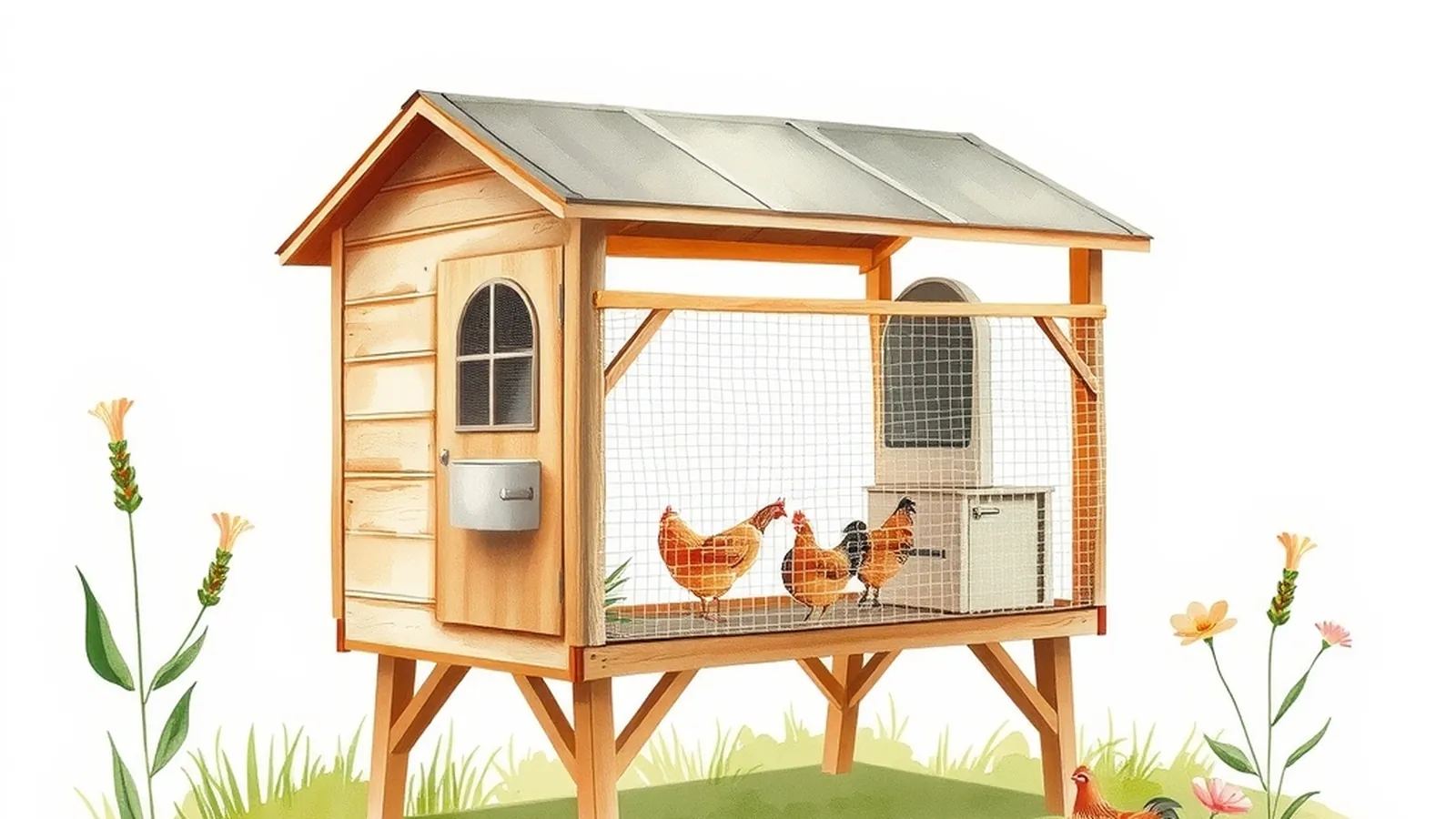
A chicken coop needs five things: enough room for your flock, roosting bars to sleep on, nest boxes for laying, good ventilation without drafts and strong protection from predators. On top of that, it should be easy for you to clean, because a coop that's hard to reach gets cleaned less often. Get these right and daily chicken care becomes much simpler.
This page is part of our Backyard Homestead section. If you haven't yet checked whether chickens are allowed where you live, start with raising backyard chickens for beginners, which covers local rules, daily care and hygiene.
The coop checklist
Use this list whether you're comparing kits, reading plans or sketching your own design.
| Feature | What to look for |
|---|---|
| Space | Room for every bird to move, plus an attached run for daytime |
| Roosts | Sturdy bars higher than the nest boxes, with room for all birds side by side |
| Nest boxes | Dark, cozy boxes with bedding, set lower than the roosts |
| Ventilation | Vents high on the walls, above the birds' heads |
| Predator protection | Hardware cloth, locking latches, a secure floor or buried apron |
| Cleaning access | A large door or removable panels so you can reach every corner |
| Drainage | A spot that stays dry, ideally on slightly raised ground |
Space: plan for more than the minimum
Coop listings often say how many birds they "hold." Treat that as a ceiling, not a target. Crowding leads to pecking, mess and stress, and birds spend more time cooped up in bad weather than you'd expect. A good rule of thumb is to buy or build for the flock you have plus a little extra.
The run matters as much as the coop. Chickens need daytime space to scratch, dust-bathe and get out of the sun. A covered run keeps out hawks and keeps the ground drier.
Roosts and nest boxes
Chickens sleep perched, so give them roosting bars. Wide, smooth wooden bars with rounded edges are easier on their feet than thin dowels. Place roosts higher than the nest boxes; otherwise birds may sleep in the boxes and soil the eggs.
Nest boxes should be dim, quiet and lined with clean bedding such as straw or wood shavings. Hens often share boxes, so you don't need one per bird. External access doors let you collect eggs without walking into the coop, which helps keep things tidy.
Ventilation without drafts
Chickens breathe out moisture, and their droppings release ammonia. Without airflow, that builds up and can lead to damp bedding, breathing problems and frostbite in cold climates. The trick is placement:
- Put vents high on the walls, near the roof, where warm moist air collects.
- Keep air from blowing directly on birds while they roost.
- Cover every vent and window with hardware cloth.
- In hot climates, add more openings and shade; heat can be harder on chickens than cold.
How much ventilation you need depends on your climate. Your local Extension office can give advice for your area.
Predator-proofing: where most losses happen
Raccoons, foxes, hawks, owls, dogs and weasels all go after chickens, and some can open simple latches or reach through thin wire. Protect your flock with layers:
- Use hardware cloth, not chicken wire, on windows, vents and the lower part of the run.
- Stop diggers. Bury a skirt of hardware cloth around the run's edge, or lay it flat outward along the ground and pin it down.
- Use locks that need two steps, such as a latch plus a clip, because raccoons can work a simple hook.
- Cover the run to keep out climbers and birds of prey.
- Close the coop every night. An automatic door helps, but check that it closes properly.
Walk the perimeter each week looking for gaps, loose staples and fresh digging.
Cleaning and hygiene
Pick a coop you can clean standing up or with a short reach. Removable droppings boards under the roosts make a quick daily or weekly scrape possible. Wear gloves and a dust mask when you change bedding, and keep coop tools outside the house. Backyard poultry can carry germs even when they look healthy, so wash your hands after every coop chore; our backyard chickens guide explains the CDC's advice in full.
Used bedding and manure can go to a compost pile to age before you use it in the garden.
Building your own coop
Building a coop is a good first carpentry project if you go slowly. Our guide to woodworking for beginners covers safety glasses, hearing protection and the basic tools you'll want before you start cutting. A few coop-specific tips:
- Use exterior-grade materials and a roof that sheds rain.
- Choose a design with doors big enough for you to reach inside easily.
- Raise the coop slightly off the ground, or give it a solid floor, to keep it dry and discourage rodents.
- Paint or finish only the outside, and let any finish cure fully before birds move in.
If you're comparing printed or downloadable plans, check that they include a cut list, a tool list and clear drawings. Our guide on how to choose DIY plans explains what a good plan includes and how to spot a weak one.
Example (fictional): Sam converted an old garden shed into a coop. They cut two high vents and covered them with hardware cloth, added a roost bar and a row of nest boxes, and built a covered run with a buried apron. Their total time was three weekends, mostly spent on the run.
Planning the coop around your homestead
Place the coop where you can reach it easily in rain or snow, close to water if possible. Having eggs on hand changes how you cook and store food. Freshly collected eggs belong in the fridge, while extra garden vegetables can be put away for later; see ways to preserve vegetables for freezing, drying and canning compared. If you plan to can, read canning basics first, since safe home canning depends on tested recipes.
Something to do this weekend
Print or copy the checklist table above and score any coop you're considering, kit or plan, on each line. Then measure the spot where it will sit and make sure you can open every door fully.
Want a step-by-step plan or guide?
Some people like the structure of a paid guide or set of plans. This button opens a third-party program from one of our advertising partners. Its claims are its own, not ours, so weigh them against our checklist for judging paid plans.
See the partner program →We may be paid when you click. The program shown can change. Read its terms before you buy anything. How this works
Frequently asked questions
Is chicken wire enough to keep predators out?
Usually not. Chicken wire keeps chickens in, but many predators can tear or reach through it. Sturdy hardware cloth on openings and lower walls, secure latches and protection against digging do a much better job.
Does a chicken coop need windows?
It needs ventilation and some daylight. High vents let moist air and ammonia escape without a draft blowing on roosting birds, and a window or two covered with hardware cloth adds light and airflow.
Should I buy a coop kit or build my own?
Either can work. Check any kit or plan for real space, ventilation, solid predator protection and easy cleaning access before you commit, since some small kits fall short on those points.