How Often to Water Houseplants
Water a houseplant when the soil is dry to the depth that plant prefers, not on a fixed day of the week. For most leafy houseplants, that means the top inch or two feels dry; for succulents and snake plants, the soil should be dry most of the way down. Check with your finger, water thoroughly until some drains out, and empty the saucer.
Of all the skills in our Houseplants section, this is the one that saves the most plants. Here's how to do it well.
Why watering schedules let you down
"Water once a week" sounds simple, but the right timing depends on things that change constantly:
- Light: a plant in a bright window dries out faster than one in a dim corner.
- Season: warm, long summer days use more water than short winter ones.
- Pot material: unglazed clay breathes and dries quickly; plastic and glazed ceramic hold moisture.
- Pot size: small pots dry out faster than large ones.
- Plant type: thin-leaved ferns want more water than thick-leaved succulents.
- Indoor air: heating and air conditioning both dry the air and the soil.
Instead of a schedule, make checking a habit. Look at your plants on the same day each week, and water only the ones that need it.
The finger test, step by step
- Push your index finger straight into the soil near the edge of the pot, down to the second knuckle, about two inches.
- Feel for moisture. Dry soil feels crumbly and warm. Damp soil feels cool and may stick to your skin.
- Compare to what the plant prefers. Leafy tropicals usually want watering when the top inch or two is dry. Succulents, cacti, snake plants and ZZ plants want the soil dry nearly to the bottom.
- For deep pots, use a wooden chopstick or skewer. Push it to the bottom, wait a minute and pull it out. Dark, damp soil clinging to it means wait.
- Lift the pot. A dry pot feels noticeably lighter than one you just watered. After a few weeks, you'll be able to judge by weight alone.
If you're growing plants in dim rooms, check more patiently. Soil far from a window can stay wet for a week or longer, which is why our guide to low light houseplants puts so much weight on watering less often.
How to water properly
When a plant does need water, give it a full drink:
- Water slowly and evenly over the whole soil surface until water runs out the drainage hole.
- Wait a few minutes and water again if the first round ran straight through dry soil.
- Empty the saucer after about 15 minutes. Roots sitting in standing water can rot.
- Use room-temperature water. Very cold water can shock tropical roots.
Small sips every few days keep only the top of the soil wet while the roots below stay dry. A thorough soak followed by a drying period encourages roots to grow deep into the pot.
Drainage matters more than anything
A pot without a drainage hole makes good watering almost impossible, because extra water has nowhere to go. A layer of gravel at the bottom doesn't fix this; it actually raises the wet zone closer to the roots.
If you love a decorative pot with no hole, use it as a cover. Keep the plant in a plastic nursery pot with holes, set it inside, and lift it out to water in the sink. Our repotting guide covers choosing pots with good drainage and fresh mix that lets water move through freely, which is often the real fix for a plant that's always soggy.
Bottom watering
Bottom watering means setting the pot in a tray or sink of water and letting the soil soak it up through the drainage hole.
When it helps: for plants that dislike wet leaves, such as African violets, for very dry soil that water runs straight past, and for small pots that are easy to move.
How to do it: fill a sink or tray with a couple of inches of room-temperature water, set the pot in, and wait until the top of the soil feels damp, often 15 to 30 minutes. Lift it out and let it drain fully.
One caution: bottom watering doesn't flush out minerals and fertilizer salts. Water from the top until it drains out now and then to rinse them through.
Seasonal watering calendar
Your timing depends on your climate, your heating and cooling, and your home's light, so treat this as a starting guide.
| Season | What usually changes | What to do |
|---|---|---|
| Spring | Days lengthen, new growth starts | Check soil more often as growth picks up |
| Summer | Warm rooms, strong light | Expect to water most often; check small pots twice a week |
| Fall | Days shorten, growth slows | Start stretching the time between waterings |
| Winter | Low light, dry heated air | Water least often, but watch plants near heaters |
Signs of too much or too little
| Too much water | Too little water |
|---|---|
| Soft, yellow lower leaves | Crispy, brown leaf edges |
| Soil that stays wet for days | Soil pulling away from the pot's sides |
| Musty smell or mushy stems | Drooping that perks up after watering |
| Fungus gnats around the pot | Lightweight pot that feels hollow |
Both problems can look like wilting, which confuses many people. Our in-depth comparison of overwatering vs underwatering shows how to check the roots and help a plant recover from either one.
When you're away
For a long weekend, water thoroughly the day you leave and move plants a bit farther from hot, sunny windows. For a longer trip, group plants together in a cooler room, or ask a neighbor to check them using the finger test. Succulents and snake plants can often go a few weeks between waterings in cool weather.
Turning a cutting into a plant
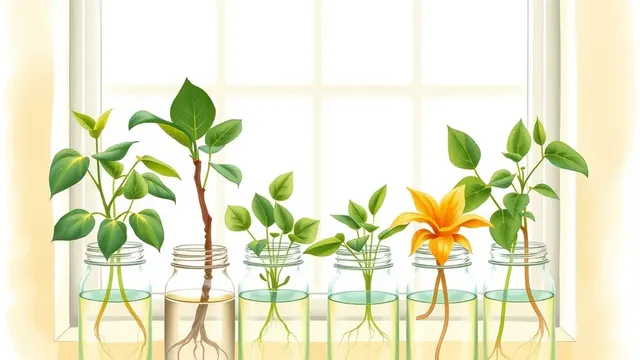
Water also plays a starring role when you multiply your plants. Many popular plants root in a glass of water, and our guide to propagation explains when to grow roots in water versus moist soil, and how to care for a new cutting while it settles in.
Free help for tricky plants
If a plant keeps struggling and you can't tell why, the Master Gardener volunteers at your local Cooperative Extension office answer questions like this from home gardeners. Our guide to free gardening resources explains how to reach them.
Something to do today
Do the finger test on every plant you own and write down which ones felt dry and which felt damp. Water only the dry ones, then empty every saucer. Next week, check again on the same day and see which plants dried faster. In a month, you'll know your plants' rhythms better than any schedule could.
Want a step-by-step plan or guide?
Some people like the structure of a paid guide or set of plans. This button opens a third-party program from one of our advertising partners. Its claims are its own, not ours, so weigh them against our checklist for judging paid plans.
See the partner program →We may be paid when you click. The program shown can change. Read its terms before you buy anything. How this works
Frequently asked questions
Is it better to underwater or overwater a houseplant?
Most houseplants recover more easily from being a little too dry than from sitting in wet soil, which can rot roots. When unsure, wait a few days and check again.
Should I use tap water for houseplants?
Tap water works for most houseplants. Letting it reach room temperature first avoids chilling roots. If you notice crusty white buildup on the soil, flush the pot with plenty of water now and then.
Do houseplants need less water in winter?
Usually, yes. Shorter days and cooler rooms slow growth, so soil dries more slowly. Keep checking the soil rather than sticking to your summer routine.